




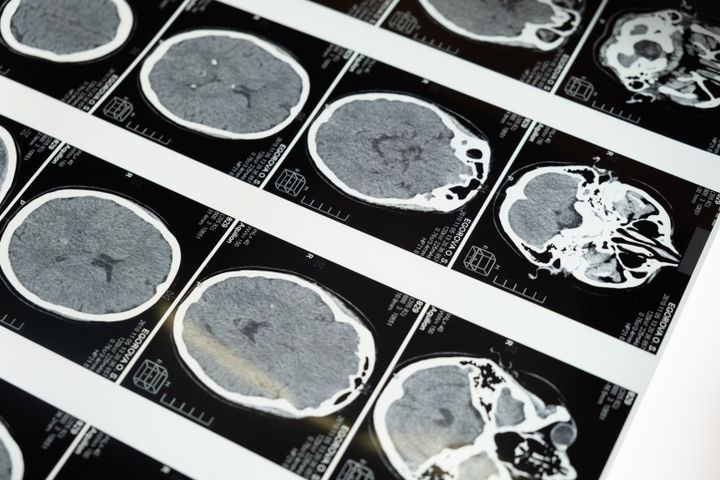
Researchers at Stanford have identified three distinct brain patterns that underlie ADHD and anxiety in children, patterns that do not follow the neat boundaries of current diagnoses. Using artificial intelligence to analyse thousands of brain scans, the team discovered these biological signatures can appear before children receive a formal diagnosis, raising the possibility of earlier detection and treatments tailored to how individual brains actually work rather than symptom checklists alone.
The findings, reported by ScienceDaily, suggest that the categories we use to understand childhood mental health may not reflect what is happening beneath the surface. A child diagnosed with ADHD and another with anxiety might share the same underlying brain type, while two children with identical diagnoses might have entirely different patterns in their scans.
When symptoms and biology do not match
Traditional diagnosis relies on observable behaviour. A child who cannot sit still, struggles to focus, or feels persistently worried receives a label based on what clinicians can see. The Stanford research suggests biology does not organise itself the same way. The three brain types the team identified cut across diagnostic boundaries, meaning children with different diagnoses can share similar brain signatures, and children with the same diagnosis can have fundamentally different patterns.
This is not the first time researchers have found that brain activity reveals hidden patterns that do not align with surface-level symptoms. The power of the Stanford study lies in its scale and the use of AI to detect patterns too subtle or complex for human analysis alone.
Photo: Landiva Weber · Pexels
Earlier windows and personalised care
One of the most striking aspects of the discovery is timing. The brain patterns appeared before children met the criteria for a clinical diagnosis, suggesting these signatures develop early. If confirmed in further research, clinicians might one day use brain scans to identify children at risk before difficulties become entrenched, opening a window for earlier support.
The implications for treatment are equally significant. If a child's struggles stem from one of three distinct brain types, interventions could be matched to biology rather than diagnosis. What works for one pattern might be less effective for another, even if both children carry the same label. The research builds on a growing body of work exploring how the brain takes shape and how biological differences influence mental health outcomes.
What this means for families and care
For families navigating ADHD or anxiety, the research offers a different lens. It acknowledges that two children with the same diagnosis might be experiencing something fundamentally different at a biological level, which could explain why treatments do not work uniformly. It also points to a future where care is more precise, where scans might guide decisions about therapy, medication, or school support in ways that feel less like trial and error.
The study also adds to a broader shift in how scientists think about the brain and mental health. Recent work has shown that anxiety may involve specific brain circuits, and that the brain is more connected to the body than previously understood. Each discovery chips away at the idea that mental health conditions are purely psychological, revealing the intricate biology underneath.

Photo: Vitaly Gariev · Pexels
A step toward understanding, not certainty
The research is early, and brain scans are not about to replace conversation and observation in diagnosis. The patterns identified need to be validated in larger, more diverse groups of children, and the practical questions of cost, access, and interpretation remain. Still, the discovery matters because it challenges assumptions and opens new paths. It suggests that children struggling with focus or worry might be experiencing the world through brain types we are only beginning to map.
For podcasters covering mental health, neuroscience, or parenting, the study offers a nuanced story about the gap between how we name distress and what causes it. It is a reminder that beneath every diagnosis is a person, and beneath every person is a brain doing its best with the wiring it has. Understanding those patterns more clearly could mean better, kinder, more effective support for children who need it.
Listen next
 Healthy Mind Healthy LifeAnxiety, Grief and Daily Meditation: How Thomas Donvil Found Calm44 min
 The Mindful LivingBreaking Free From Hidden Patterns That Keep High Achievers Stuck with Steve Barton29 min
 The Soul MirrorThe Life You Want May Be Hidden Behind Your Programming | Dr. Joseph Drolshagen32 min
Based on reporting from sciencedaily.com.

For the PodHub Journal. Stories and research on the mind, from the team behind the network's podcasts.
Comments
Loading comments…