
A team of researchers has pinpointed a specific group of neurons in the brain's amygdala that appears to control both anxiety and social behavior. When they restored normal function to this tiny circuit in mice, the animals' anxiety and social difficulties disappeared. The findings point toward a potential new direction for treating anxiety disorders in humans.
The study identifies a previously unknown cluster of cells within the amygdala, a region long associated with fear and emotional responses. What makes this discovery particularly interesting is how precisely these neurons seem to influence both feelings of anxiety and the ability to engage socially with others. The connection between these two aspects of behavior suggests they may share common neural pathways.
A precise target in a complex system
The brain's amygdala has been studied for decades, but this research reveals that not all amygdala neurons do the same work. By identifying this specific group, scientists have found what appears to be a more targeted mechanism than previously understood. When the researchers intervened to restore typical activity levels in these neurons, the mice showed measurable improvements in both their anxiety responses and their willingness to interact with other mice.
This level of precision matters because anxiety disorders affect millions of people, and current treatments don't work equally well for everyone. Medications and therapies often take a broader approach, affecting multiple brain systems at once. Understanding that a small, identifiable circuit plays such a central role could eventually lead to interventions that are more focused and potentially more effective.
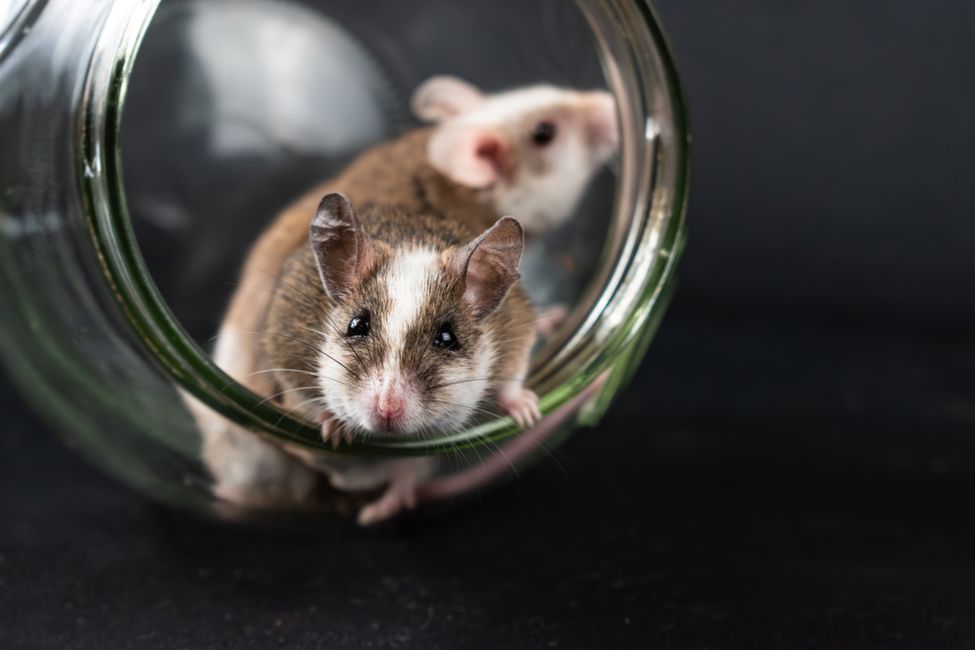
*Photo: Nikolett Emmert · Pexels*
What this means for future treatment
The researchers describe their findings as revealing a promising new target. That language is careful and appropriate. This is early-stage research conducted in animals, and the path from a mouse study to human treatment is long and uncertain. But the fact that restoring normal activity in this circuit reversed both anxiety and social deficits suggests the mechanism is robust enough to be worth pursuing.
Human anxiety disorders are complex. They arise from a combination of genetic factors, life experiences, brain chemistry, and environmental influences. No single brain circuit is likely to explain everything. But identifying specific neural pathways that contribute to anxiety gives researchers new places to look and new questions to ask.
The social dimension of the findings is also significant. Many people who experience anxiety also struggle with social situations, and the two often reinforce each other. Understanding that both may be influenced by the same small group of neurons offers a potential explanation for why these challenges so often occur together.
From the lab to real life
It's worth being clear about what this study does and doesn't tell us. The researchers worked with mice, which are valuable models for understanding basic brain function but whose experiences don't map perfectly onto human mental health. The techniques used to manipulate these neurons in the lab aren't yet ready for use in people. And even if they were, the human amygdala and the systems it connects to are far more complex than those in mice.
*Photo: Tara Winstead · Pexels*
Still, this kind of foundational research matters. Every effective treatment we have today started with someone asking a basic question about how the brain works. This study adds a piece to that larger puzzle. It shows that anxiety isn't just a vague state of the whole brain, but something that can be traced to specific, identifiable circuits. That makes it less mysterious and more approachable as a scientific problem.
For the researchers involved, the next steps will likely include understanding exactly how these neurons communicate with other parts of the brain, what causes them to become overactive or underactive in the first place, and whether similar circuits exist in human brains. Each of those questions could take years to answer.
For the rest of us, the takeaway is simpler. Anxiety has physical roots in the brain, and those roots are becoming clearer all the time. The more we understand about the specific mechanisms involved, the closer we get to treatments that can help more people more effectively. This study doesn't offer a cure, but it does offer hope that the science is moving in a meaningful direction.
The findings also remind us that mental health and social wellbeing are deeply connected in the brain itself, not just in our daily experience. The circuits that help us feel calm may be the same ones that help us reach out to others.
Based on reporting from sciencedaily.com.

Comments
Loading comments…