
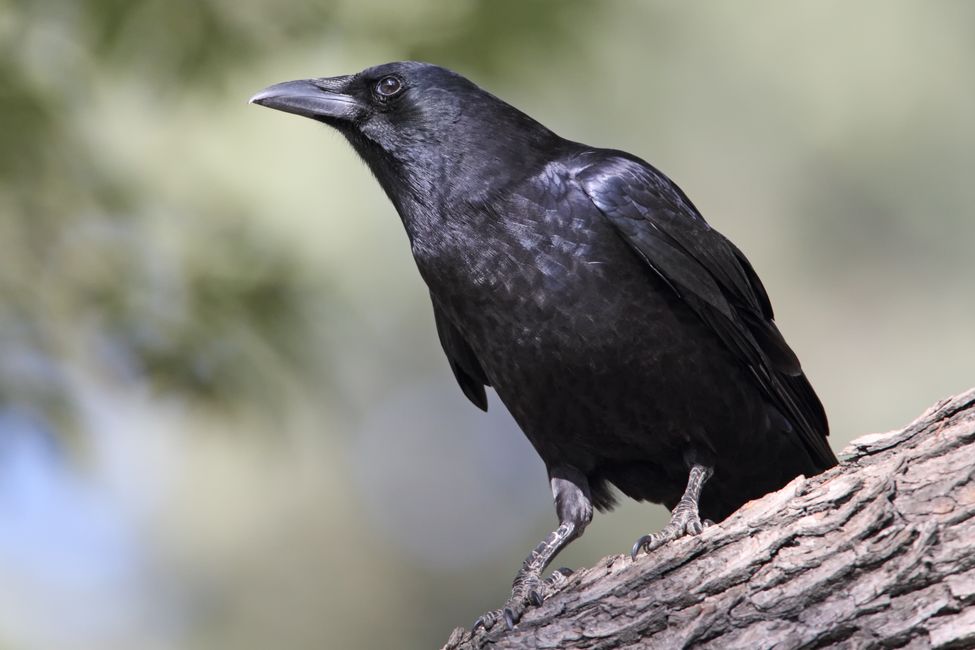

Crows can make visual decisions in just 235 milliseconds, roughly half the time humans need for the same task, according to researchers at the University of Tübingen. The birds matched the accuracy of people and monkeys while processing information and choosing twice as quickly, raising fresh questions about how different kinds of brains solve the same problems.
The finding adds another layer to what we already know about crow intelligence. Now it turns out their brains work at a speed that outpaces our own.
How the experiment worked
The German team trained crows to watch a screen filled with moving dots and identify which direction the dots travelled. This sort of task has been used for decades to study decision making in humans and other primates, so the comparison is direct. Researchers measured how long each species took from seeing the stimulus to making a choice.
The crows clocked in at 235 milliseconds while maintaining remarkable accuracy. The speed advantage is all the more striking given how different bird brains are from ours. Mammals rely on a layered structure called the neocortex to process sensory information and guide decisions. Birds lack a neocortex entirely, yet they reach similar outcomes through another route altogether.
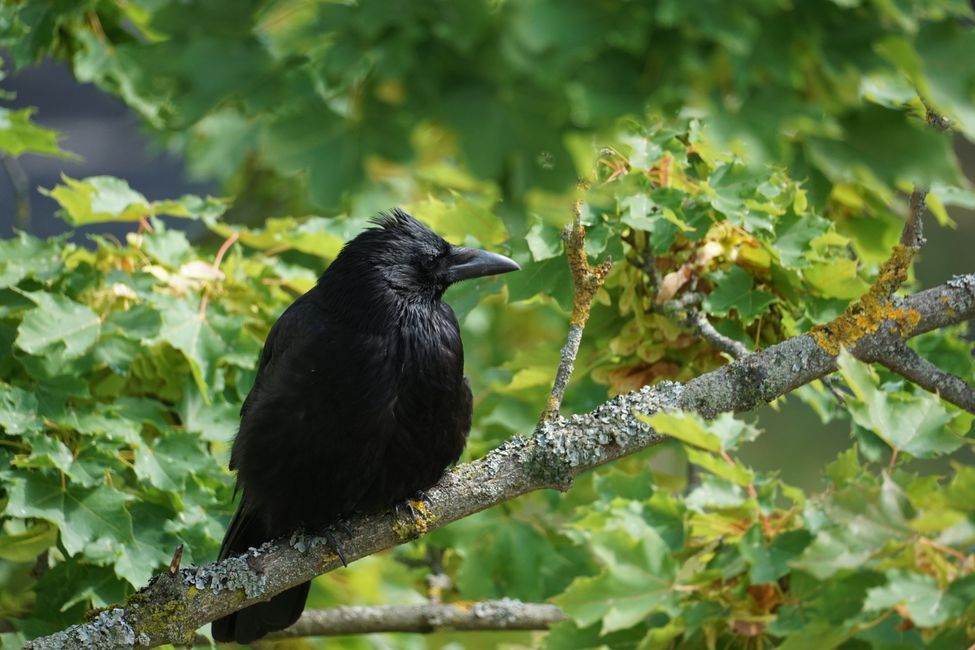
Photo: Michaela St · Pexels
What faster processing might mean
Speed in this context doesn't just mean reacting quickly. It means the brain is integrating sensory data, weighing options, and committing to a choice in less time. For a wild crow, that could translate into better odds when a predator appears or when a fleeting opportunity for food opens up.
The research also points to something broader about intelligence. We tend to assume that bigger brains with more neurons work better, but crows manage sophisticated tasks with far smaller brains than ours. Efficiency seems to matter as much as size.
Understanding how crows achieve fast, accurate decisions could inform research into brain circuits that influence anxiety and other conditions tied to how we process information under pressure. If birds can wire their brains to handle sensory input more efficiently, studying those pathways might reveal principles that apply across species.
Implications for brain research
The work connects to broader investigations of brain function. Researchers are mapping brain rhythms linked to movement disorders and exploring how cellular energy shapes mental health. Crows remind us that evolution has found many ways to build a working mind, and each design offers clues about what's essential and what's flexible.
The fact that a bird brain can outpace mammalian brains in certain tasks challenges assumptions about what cognitive architecture works best. Different doesn't mean inferior. The crow's brain achieves results through organisation and wiring that differ fundamentally from our own, yet the outcomes in this visual task were not just comparable but faster.
This has practical implications beyond pure science. When we understand that speed and accuracy can emerge from compact, differently organised neural systems, it opens questions about how we measure and value different kinds of thinking. It also suggests that how our brains find the words we need might be just one of many possible solutions to the problem of processing and responding to the world.
The study appears in ScienceDaily, and while the implications stretch from neuroscience to artificial intelligence, the immediate takeaway is humbling: crows can outpace us in tasks we think of as fundamentally cognitive.
For anyone making podcasts about science or wellbeing, this research is a reminder that intelligence comes in forms we're only beginning to measure. The speed and elegance of a crow's decision making might inspire fresh ways of thinking about focus, attention, and the trade-offs our own brains make every moment.
Based on reporting from sciencedaily.com.

For the PodHub Journal. Stories and research on the mind, from the team behind the network's podcasts.



Comments
Loading comments…