

Stanford researchers have identified specific brain differences in children who persistently struggle with mathematics. The patterns involve how the brain switches between problem-solving strategies, adjusts to changing difficulty, and refines methods over time. These differences appear in children with developmental dyscalculia and could predict certain mathematical abilities.
The research looked at children with developmental dyscalculia, a condition that affects working with numbers. Three key findings emerged: these children were slower to switch strategies when tackling maths problems, less responsive when difficulty changed, and less able to improve their approach over repeated attempts. Brain activity patterns matched these challenges and showed distinct signatures.
What the findings reveal
The work highlights something fundamental about how we handle numbers. Mathematical thinking requires constant evaluation of which approach might work, recognition when a method is failing, and smooth transitions between different tactics. This flexibility in strategy varies between children, and the Stanford team has now linked that variation to observable brain patterns.
For children with dyscalculia, the neural circuits that coordinate these switches operate differently. The research does not suggest lower intelligence or effort. Instead, it points to underlying differences in how parts of the brain communicate when faced with numerical tasks. Scientists have already shown that distinct neural signals can mark other developmental conditions, and this work adds detail to that emerging picture.

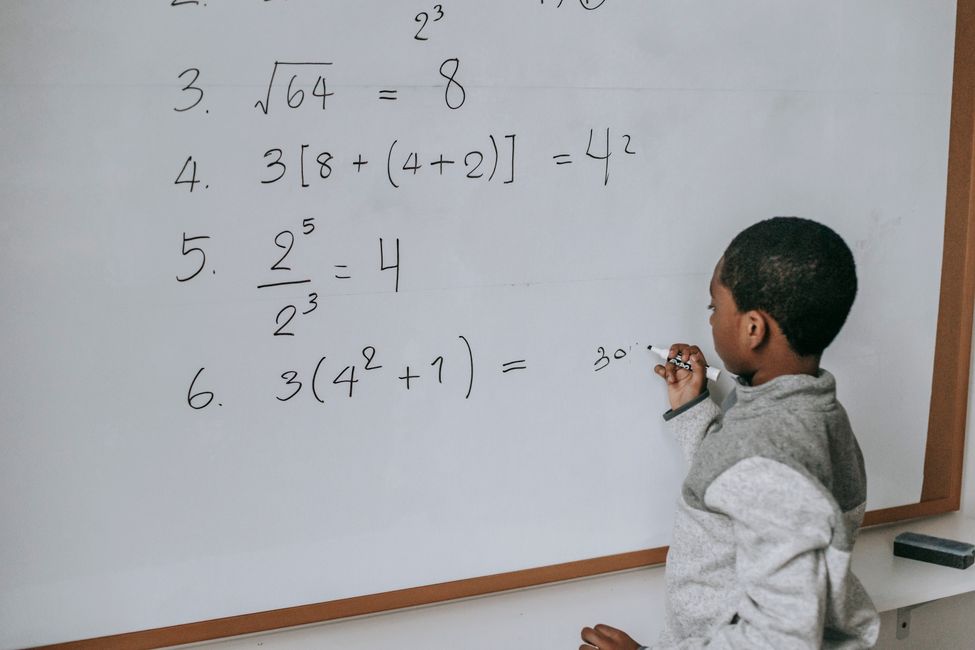
Photo: JIUN-JE LIN · Pexels
Responsiveness to difficulty stood out in the results. When a problem becomes harder, most children naturally adjust their tactics. Children with dyscalculia showed less of this responsiveness, as if the brain was not registering the same cues that typically prompt a change in approach. The inability to improve methods over time suggests the feedback loop that refines strategy works differently in these children.
Implications for support
The findings may change how parents and teachers think about helping children who find numbers difficult. If the challenge sits partly in how the brain manages strategy rather than just skill level, support might target that flexibility directly. The research does not prescribe interventions, but understanding the mechanism opens new directions.
Brain patterns that predict mathematical abilities raise questions about early identification. Much more research is needed before this becomes practical, but the connection between observable brain activity and specific struggles suggests future tools may become available. Other work has shown how brain imaging can map differences linked to aging, demonstrating the potential of these methods.
The study focused on strategy switching, difficulty adjustment, and method refinement. Each involves coordination between brain regions, and each showed measurable differences in children with dyscalculia. This specificity matters because it moves the conversation from vague descriptions of struggle towards concrete processes that vary between individuals.
A biological basis for difference
Knowing these differences have a biological basis can shift how children and families understand persistent difficulty with maths. The research does not offer clinical guidance or diagnosis, but it adds weight to the idea that learning differences often reflect how individual brains are wired rather than character or commitment.
The Stanford team used brain imaging to reveal patterns invisible to standard assessments. Similar techniques have allowed researchers to turn brain signals into visual representations, showing just how much detail these methods can capture. As imaging becomes more refined, the gap between what we observe in behaviour and what we see in the brain continues to narrow.
Developmental dyscalculia affects a meaningful number of children, yet it remains less widely recognised than other learning differences. This research contributes to a clearer picture of what distinguishes it at a neural level. The ability to link brain activity with specific aspects of mathematical thinking, such as strategy switching and responsiveness to difficulty, provides a foundation for future work.
For families, the findings offer a biological explanation for why certain children find numbers harder despite effort and support. For educators, they suggest that struggles with maths may need approaches tailored to how a child's brain manages problem-solving, not just more practice with the same methods.
For podcasters exploring education or neuroscience, this research offers a concrete example of how brain differences shape learning. For anyone supporting a child who finds maths challenging, it is a reminder that difficulty often has roots in biology, not character.
Listen next
 BizBlendSame Crisis, Different Brain: What ADHD Leaders See That Others Miss, with Kai Stowers26 min
 Healthy Mind Healthy LifeBrain Boost: Strategies for Optimizing Your Mental Performance30 min
 Healthy Mind Healthy LifeFrom Lyme Disease to Brain Tumor: Unveiling My Gut Health Journey and Healing Strategies from ’75 Gut Healing Strategies and Biohacks32 min
Based on reporting from sciencedaily.com.

For the PodHub Journal. Stories and research on the mind, from the team behind the network's podcasts.



Comments
Loading comments…