Researchers turn mouse brain signals into video, opening window into perception
A team has decoded brain activity to recreate what mice were watching, a step toward understanding how our minds shape what we see.
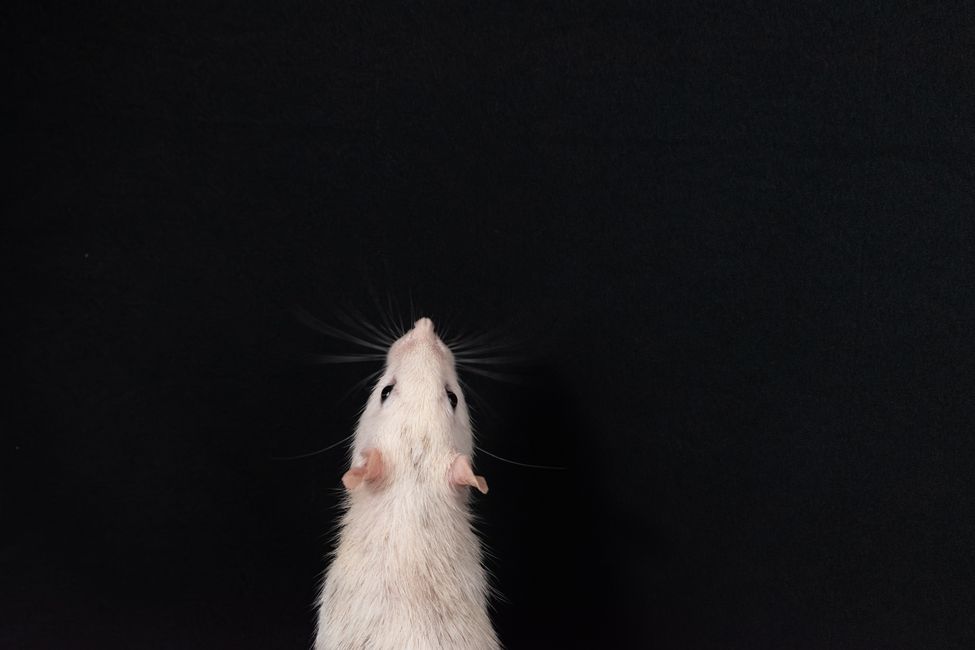
Researchers have achieved something that sounds like science fiction: they've reconstructed short videos of what mice were looking at using only the electrical signals from their brains. The breakthrough offers a rare glimpse into how perception works at its most fundamental level, and raises questions about the distance between what our eyes take in and what our minds actually experience.
The experiment captured ten-second video clips based purely on activity in the visual cortex, the brain region that processes what we see. No cameras. No recordings of the actual images. Just the firing patterns of neurons, decoded and transformed back into moving pictures.
Reading the brain's visual language
The visual cortex doesn't work like a camera recording reality. It's more like a translator, taking raw information from the eyes and reshaping it into something the rest of the brain can use. What the researchers managed to do was reverse that translation, moving backwards from neural signals to approximate the original visual scene.
This kind of work has been attempted before in other animals, but the quality and length of these reconstructions mark a meaningful step forward. Ten seconds might not sound like much, but in neuroscience terms, it represents a substantial window into ongoing brain activity. Previous efforts often produced static images or very brief flickers of recognition.

*Photo: DS stories · Pexels*
The implications stretch beyond the technical achievement itself. If scientists can decode what a mouse sees from brain signals alone, it suggests we're getting closer to understanding the deeper mystery: how the brain doesn't just receive information, but actively constructs our experience of the world.
The gap between seeing and perceiving
What we think of as "seeing" isn't passive. The brain fills in gaps, makes predictions, filters out noise, and emphasises certain features over others. It's why optical illusions work, why we sometimes see faces in clouds, and why two people can watch the same event and come away with different impressions.
This research could eventually help reveal where and how those transformations happen. At what point does raw visual data become interpretation? When does the brain start adding its own commentary to the image? These aren't just academic questions. They touch on fundamental aspects of consciousness and subjective experience.
For now, the technique works in mice under controlled conditions. The animals were watching specific visual stimuli while researchers recorded from their visual cortex using advanced imaging methods. Translating this to human perception would involve enormous additional complexity, not least because our visual systems are far more sophisticated.

*Photo: Google DeepMind · Pexels*
But the principle matters. If the brain's perceptual machinery can be decoded, it means that subjective experience, at least in its visual form, has a readable structure. It's not completely hidden or mystical. It leaves traces that technology might one day interpret.
What it means for understanding ourselves
This work sits at an interesting intersection between pure neuroscience and something more personal. We spend our lives inside our own perceptions, rarely questioning whether what we see matches what's actually there. Most of the time, we assume our eyes are telling us the truth.
But the brain is always working behind the scenes, adjusting and interpreting. It prioritises certain details and downplays others based on context, emotion, expectation and past experience. Understanding how that process unfolds could change how we think about everything from memory to mental health.
When someone experiences a hallucination or a vivid flashback, their brain is generating perceptual experience without corresponding external input. If we can map how visual perception is constructed from neural activity, we might better understand what happens when that process goes awry, or when it creates experiences that feel entirely real but don't match the outside world.
This isn't about diagnosis or treatment, at least not yet. But it's a reminder that perception is more fragile and more active than we usually acknowledge. The boundary between what's out there and what's in here is blurrier than it seems.
For anyone interested in consciousness, storytelling, or how we make sense of the world, this research offers a humbling insight. Our experience of reality is a construction, built moment by moment by billions of neurons working in patterns we're only beginning to decode. The mice in this study were seeing simple visual patterns, but the same principles apply to us. What we perceive is not a direct copy of the world, but a version our brains have decided to show us.
Based on reporting from sciencedaily.com.



Comments
Loading comments…