The Mystery of Smooth Brains and What It Reveals About Our Own
Tiny marmoset brains hold surprising clues about how our own brains grew large and folded, and what makes human minds unique.
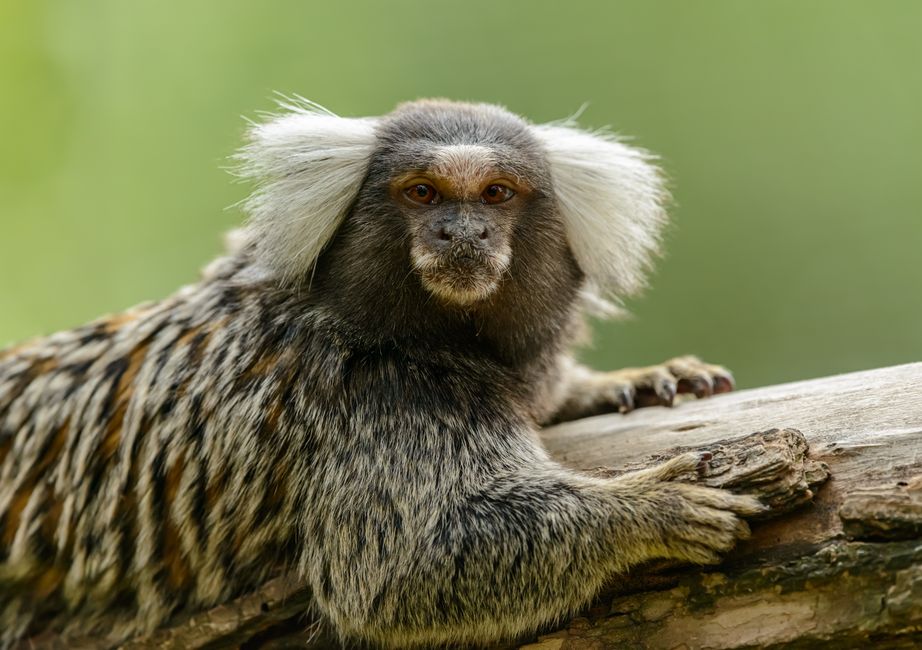
Scientists have uncovered a fascinating biological secret hiding in plain sight: why some primates have smooth brains while others, including humans, have deeply folded ones. The answer comes from an unexpected place, the common marmoset, a small monkey whose unusually smooth brain has puzzled researchers for years.
Despite being primates like us, marmosets develop brains that look remarkably different from human brains. While our brains are covered in grooves and ridges, theirs remain almost entirely smooth. This isn't just a cosmetic difference. Those folds in our brains represent extra surface area, more space for the neurons that allow us to think, plan, create and reflect.
A slowdown in the building process
The breakthrough came when researchers looked closely at what happens during early brain development. All primates, including marmosets and humans, start building their brains in similar ways. But somewhere along the path, something changes in marmosets that doesn't happen in other primates.
The key lies in the cells responsible for making neurons, the fundamental building blocks of the brain. In marmosets, these brain-building cells undergo subtle changes that slow down neuron production. Think of it like a factory that shifts to a slower production line. Fewer neurons get made, which means less brain tissue overall, and ultimately a smaller, smoother brain.
This might sound like a disadvantage, but marmosets are intelligent, social animals who navigate their world perfectly well. Their brains simply took a different evolutionary path. What makes this discovery so valuable is what it reveals about the opposite process, how brains like ours became large and elaborately folded.
*Photo: Fayette Reynolds M.S. · Pexels*
Evolution's different paths
Understanding why marmoset brains stay smooth helps scientists work backwards to understand why human brains didn't. Our brains kept up a faster pace of neuron production during crucial developmental windows. More neurons meant more brain tissue, and as that tissue packed into the confines of the skull, it folded in on itself to fit. Those wrinkles are the signature of a brain that kept growing.
The research suggests that relatively small tweaks to how brain-building cells behave can lead to dramatically different outcomes. Evolution doesn't always require massive genetic overhauls. Sometimes tiny adjustments to timing, speed or cell behaviour create profound differences between species.
This finding fits into a larger picture scientists have been assembling about brain evolution. The human brain didn't appear overnight. It emerged through countless small changes over millions of years, each building on what came before. Some changes affected brain size. Others influenced how different regions connect and communicate. Together, they shaped the organ that allows us to wonder about our own origins.
What it means for understanding ourselves
These discoveries matter beyond evolutionary biology. Every time we learn something fundamental about how brains develop, we gain insights that could eventually help when development goes differently than expected. Understanding the basic mechanisms, the cells, signals and timing that build a healthy brain, creates a foundation for recognising what might go wrong and potentially how to support better outcomes.

*Photo: Google DeepMind · Pexels*
There's something deeply human about wanting to understand where we came from and what makes us who we are. Our wrinkled brains are part of that story. They're evidence of an evolutionary journey that equipped us with remarkable cognitive abilities, the capacity to learn language, to imagine futures that don't exist yet, to create art and music, to form complex social bonds and to ask questions about marmoset brains in the first place.
The marmoset research reminds us that we're part of a family tree with many branches, each adapted to different circumstances. Our large, folded brains aren't inherently better than smooth ones. They're simply suited to the particular challenges and opportunities our ancestors faced. Marmosets found their own successful path through evolution, one that didn't require the metabolic expense of maintaining a massive brain.
For those of us interested in mental wellness and the mind, studies like this offer perspective. Our brains are the product of deep history, built by processes that unfold over months of development and refined by millions of years of evolution. That complexity deserves respect and care. Understanding how brains come to be, how subtle changes in development can lead to different outcomes, enriches our appreciation for the extraordinary organ we carry with us every day.
The next time you learn something new, remember a thought, or feel a complex emotion, you're experiencing the work of billions of neurons arranged in intricate folds. Those wrinkles tell a story, and scientists are still learning to read it.
Based on reporting from sciencedaily.com.



Comments
Loading comments…