What if forgetting is actually your brain growing up?
New research suggests that as we age, our brains may not be failing but deliberately shifting toward understanding patterns over memorising details.

We tend to think of memory loss as one of the saddest parts of getting older. Forgetting where we put our keys, struggling to recall a name, losing the sharpness we once had. But what if that familiar story is incomplete? What if our aging brains are not simply losing capacity, but making a trade that evolution shaped over millennia?
Scientists are now exploring the idea that the aging brain undergoes a transformation rather than a decline. Instead of holding onto every detail, it shifts its energy toward seeing the bigger picture. The change may feel like loss when we measure it by the standards of youth, but researchers suggest it could be something far more interesting: an adaptation that allows older people to develop wisdom and pass on decades of accumulated knowledge to the next generation.
Trading details for patterns
The research points to a fundamental shift in how the brain prioritises information as we age. Where a younger mind excels at encoding specific details and creating new memories quickly, an older brain may be reorganising itself to recognise patterns, make connections across experiences, and understand context in ways that require time and perspective to develop.
This is not about romanticising memory loss or pretending that cognitive changes don't come with real challenges. They do. But the emerging picture suggests that some of what we call decline might also be reallocation. The brain may be investing less in remembering where you parked the car and more in understanding how people behave, how systems work, and what truly matters.
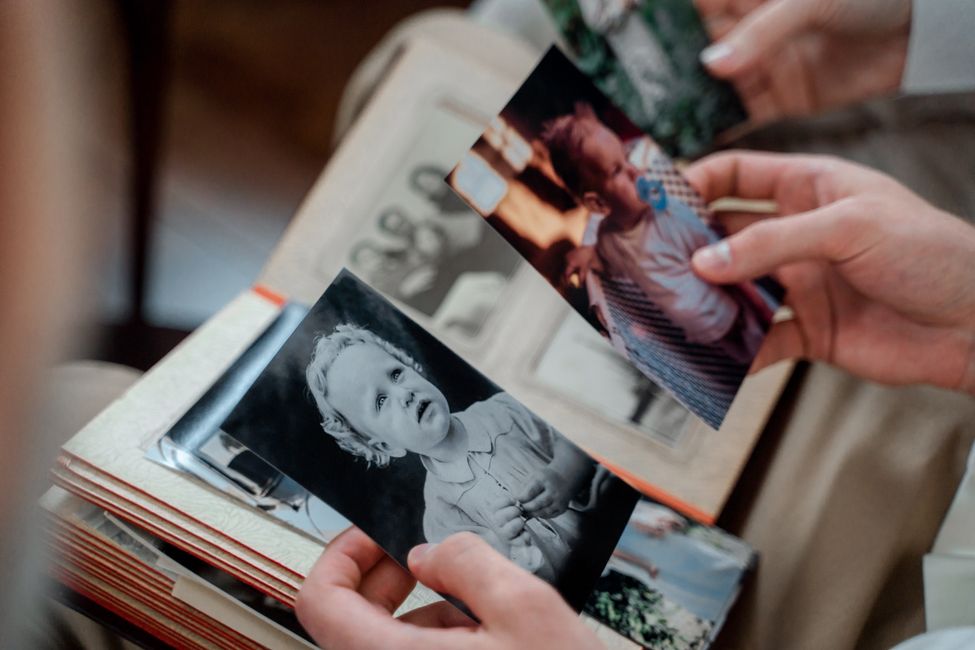
*Photo: cottonbro studio · Pexels*
It is an idea that challenges the deficit model we have inherited, where aging is measured only by what we lose. If the shift is evolutionary, shaped over countless generations, then it likely served a purpose. Older members of human communities held knowledge that could not be learned quickly. They understood seasons, relationships, risks, and rhythms. They could see what younger eyes could not yet perceive.
What wisdom actually looks like
Wisdom is one of those words we use often but define poorly. In this context, researchers are pointing to something specific: the ability to integrate information across time, to weigh competing values, to offer guidance that accounts for complexity and nuance. These are not skills that emerge from a sharp memory alone. They require perspective, and perspective requires time.
The idea is not that every older person automatically becomes wise, but that the brain's changing priorities create the conditions for wisdom to develop. Details fade, but the shape of things becomes clearer. You might forget the name of a colleague from twenty years ago, but you remember what you learned about trust, about ambition, about how organisations change.

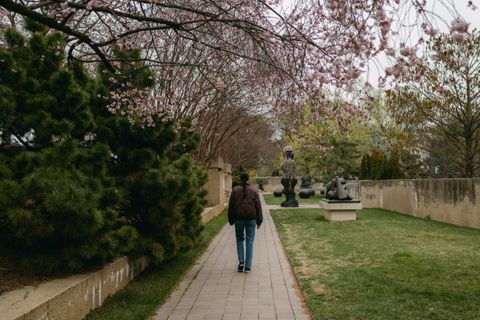
*Photo: Julia M Cameron · Pexels*
This framing also offers something valuable to people experiencing these changes: a different lens. Instead of seeing every forgotten word as a loss, it becomes possible to ask what the brain is doing instead. Are you noticing patterns you missed before? Are you better at seeing what matters in a conversation, even if you cannot recall every word that was said?
A different measure of capability
Our culture prizes speed, recall, and the kind of intelligence that peaks in youth. We build tests and systems around those values. But if the aging brain is optimised for something else, then we may be measuring people against the wrong yardstick.
The implications stretch into how we structure work, how we value contributions, and how we think about intergenerational collaboration. If older adults hold a kind of knowledge that cannot be rushed, then sidelining them or assuming diminished capacity is not just unkind but wasteful.
For individuals, this research offers a reframe. It does not erase the grief that can come with cognitive changes, but it creates space for a fuller story. Your brain is not necessarily failing you. It may be doing what it was shaped to do: moving from the granular to the meaningful, from the specific to the integrated.
This matters especially in the context of mental wellness, where the stories we tell ourselves shape how we feel. If you see aging only as loss, the emotional weight of that narrative is heavy. If you can hold the possibility that something else is also happening, that some doors close while others open, the experience becomes more complex and more human.
Why this matters
For podcasters and creators in the wellness space, this research is a reminder to question inherited narratives. The way we talk about aging shapes how people experience it. There is room for honesty about difficulty, and also room for curiosity about transformation.
For anyone navigating the changes that come with getting older, this offers permission to value what you are becoming, not just mourn what you were. Memory is precious, but it is not the only currency of a meaningful mind.
Based on reporting from sciencedaily.com.

Comments
Loading comments…