

5 Min
Can You Really Learn While You Sleep?
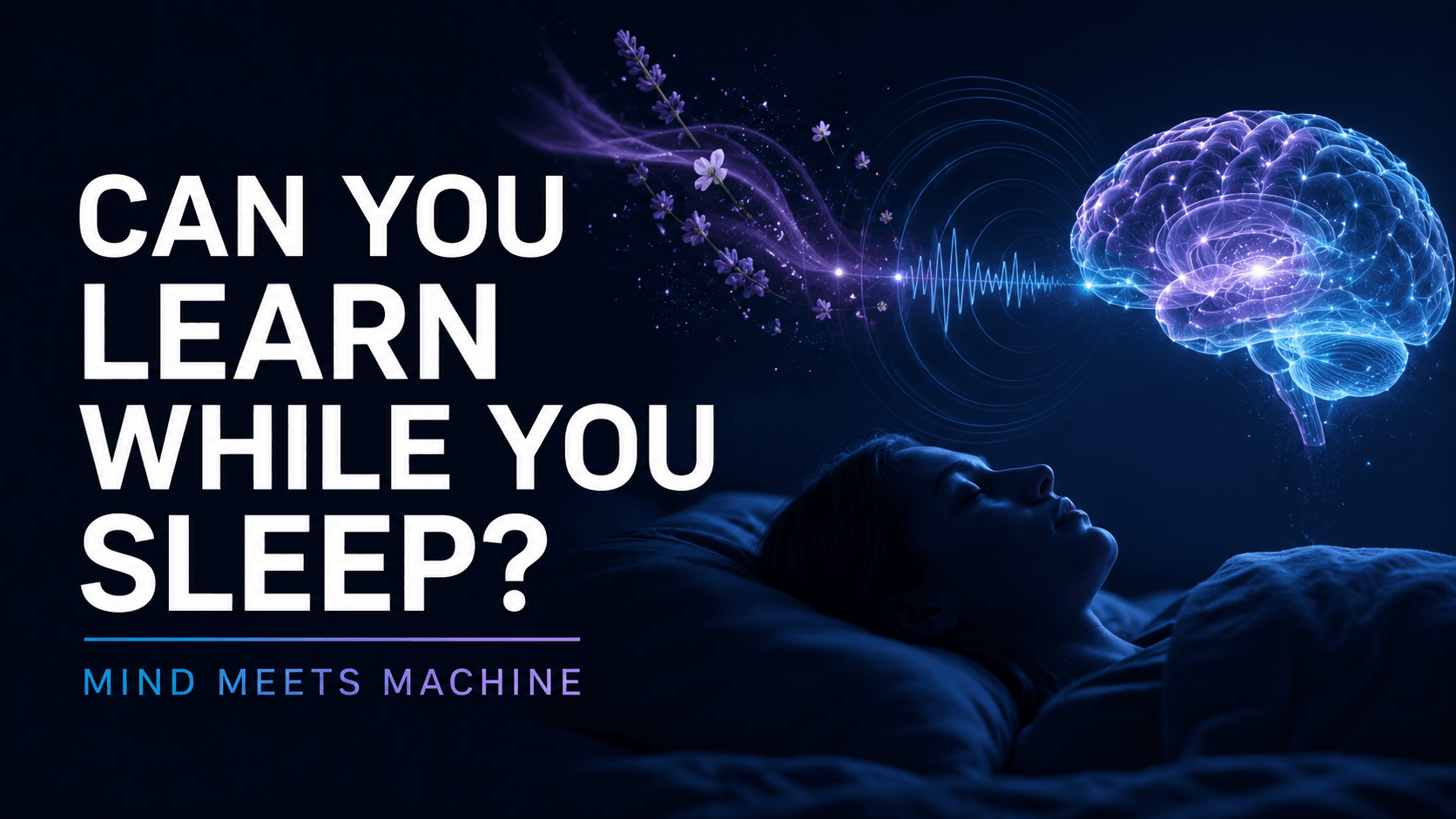
What if sleep could do more than help you rest? Imagine studying something important during the day, going to bed, and allowing your brain to quietly strengthen that memory while you sleep. Not by feeding you new information, but by helping your mind hold on to what it has already learned.
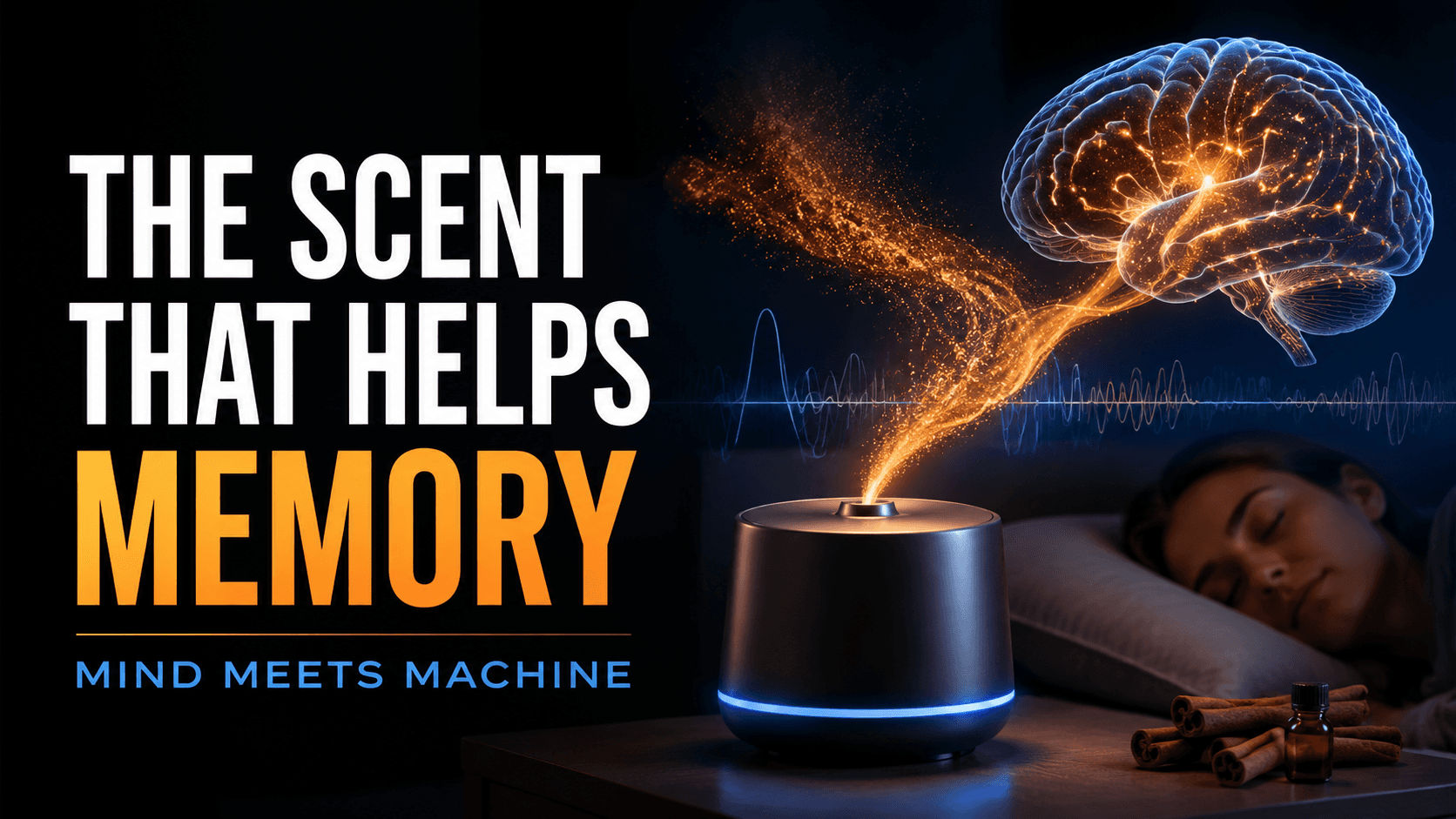
The connection between scent and memory
Brandon explained targeted memory reactivation through a simple example.
Suppose a student is learning biology while being exposed to a distinctive scent, such as cinnamon. The brain may begin associating that scent with the material being studied.
Later, while the student sleeps, the same scent can be released during a particular stage of sleep. A related sound cue may also be played at a carefully controlled volume.
The intention is not to reteach the material. It is to remind the sleeping brain of something it has already encountered.
The scent becomes a quiet bridge between studying, sleeping and remembering.

Why timing matters
This process is more complicated than placing a diffuser beside the bed.
Sleep moves through different stages, and people may respond differently depending on their age, sleep quality and individual patterns. A cue that helps during one stage may be ineffective or disruptive during another.
Volume also matters.
Brandon discussed research in which audio cues initially produced no meaningful improvement. Researchers later realised that some participants were waking because the sounds were too loud. When the volume was lowered, the results changed.
It is a useful reminder that technology does not become effective simply because the underlying idea is promising. The details matter.
A scent released at the wrong interval may do nothing. A sound played too loudly may interrupt the very sleep required for memory consolidation.
That is the possibility Brandon Christian is exploring through targeted memory reactivation.
In our conversation on Mind Meets Machine, Brandon was careful to separate science from wishful thinking.
You cannot place headphones over your ears, play a language lesson overnight, and wake up fluent. The sleeping brain does not absorb completely new information in that way.
But sleep does play an important role in memory consolidation. It helps the brain organise, strengthen and store experiences from the day.
The question is whether carefully timed sensory cues can support that natural process.
Technology should support effort
Perhaps the most grounded part of this conversation was Brandon’s insistence that this technology should sit on top of traditional learning, not replace it.
Students still need to study.
They may still use notes, flashcards, revision tools or learning platforms. Sleep-based cues cannot compensate for information that was never properly understood in the first place.
The technology is designed to support the work, not remove the need for it.
That principle reaches far beyond memory.
We often expect technology to rescue us from effort. We look for the device, application or shortcut that will remove uncertainty and make improvement automatic.
But the most useful tools may be the ones that work quietly beside us. They do not replace human participation. They strengthen what we are already trying to build.
Memory does not sleep
While the body rests, the brain continues processing the day.
It sorts through experiences, strengthens certain connections and allows others to fade. We may not consciously feel that work happening, but it shapes what remains available to us the following morning.
Targeted memory reactivation asks whether we can communicate gently with that process.
The science is still developing. The results are not universal, and responsible experimentation matters.
Yet the larger idea is deeply human.
Learning does not end when we close the book. Memory continues moving through us, even in the quiet.
Perhaps the future of learning will not be about forcing more information into an exhausted mind.
Perhaps it will be about understanding when the mind is ready to receive, when it needs to rest, and how the tools we create can respect both.
Based on Avik Chakraborty’s conversation with Brandon Christian on Mind Meets Machine, part of the Healthy Mind by Avik™ and Podhub Network.



A personal beginning
Brandon’s interest in this field began when his grandmother experienced memory difficulties after a fall.
He wanted to help her remember important daily things, including taking medication. That search led him to early studies on targeted memory reactivation and eventually to his first prototype.
The initial version was imperfect.
It delivered cues at fixed intervals throughout the night without understanding the person’s sleep stage. Later research showed him why that approach was not enough.
Instead of protecting the idea or pretending the first version was successful, he rebuilt it.
That honesty stayed present throughout our conversation.
Some studies in this field have produced encouraging results. Others have shown little or no improvement. Brandon does not promise that someone scoring 50% on an examination will suddenly achieve 90%.
What he sees as more realistic is a modest improvement that may become meaningful when someone is already close to an important threshold.
Share:


The connection between scent and memory
Brandon explained targeted memory reactivation through a simple example.
Suppose a student is learning biology while being exposed to a distinctive scent, such as cinnamon. The brain may begin associating that scent with the material being studied.
Later, while the student sleeps, the same scent can be released during a particular stage of sleep. A related sound cue may also be played at a carefully controlled volume.
The intention is not to reteach the material. It is to remind the sleeping brain of something it has already encountered.
The scent becomes a quiet bridge between studying, sleeping and remembering.
Why timing matters
This process is more complicated than placing a diffuser beside the bed.
Sleep moves through different stages, and people may respond differently depending on their age, sleep quality and individual patterns. A cue that helps during one stage may be ineffective or disruptive during another.
Volume also matters.
Brandon discussed research in which audio cues initially produced no meaningful improvement. Researchers later realised that some participants were waking because the sounds were too loud. When the volume was lowered, the results changed.
It is a useful reminder that technology does not become effective simply because the underlying idea is promising. The details matter.
A scent released at the wrong interval may do nothing. A sound played too loudly may interrupt the very sleep required for memory consolidation.
That is the possibility Brandon Christian is exploring through targeted memory reactivation.
In our conversation on Mind Meets Machine, Brandon was careful to separate science from wishful thinking.
You cannot place headphones over your ears, play a language lesson overnight, and wake up fluent. The sleeping brain does not absorb completely new information in that way.
But sleep does play an important role in memory consolidation. It helps the brain organise, strengthen and store experiences from the day.
The question is whether carefully timed sensory cues can support that natural process.
Technology should support effort
Perhaps the most grounded part of this conversation was Brandon’s insistence that this technology should sit on top of traditional learning, not replace it.
Students still need to study.
They may still use notes, flashcards, revision tools or learning platforms. Sleep-based cues cannot compensate for information that was never properly understood in the first place.
The technology is designed to support the work, not remove the need for it.
That principle reaches far beyond memory.
We often expect technology to rescue us from effort. We look for the device, application or shortcut that will remove uncertainty and make improvement automatic.
But the most useful tools may be the ones that work quietly beside us. They do not replace human participation. They strengthen what we are already trying to build.
Memory does not sleep
While the body rests, the brain continues processing the day.
It sorts through experiences, strengthens certain connections and allows others to fade. We may not consciously feel that work happening, but it shapes what remains available to us the following morning.
Targeted memory reactivation asks whether we can communicate gently with that process.
The science is still developing. The results are not universal, and responsible experimentation matters.
Yet the larger idea is deeply human.
Learning does not end when we close the book. Memory continues moving through us, even in the quiet.
Perhaps the future of learning will not be about forcing more information into an exhausted mind.
Perhaps it will be about understanding when the mind is ready to receive, when it needs to rest, and how the tools we create can respect both.
Based on Avik Chakraborty’s conversation with Brandon Christian on Mind Meets Machine, part of the Healthy Mind by Avik™ and Podhub Network.
A personal beginning
Brandon’s interest in this field began when his grandmother experienced memory difficulties after a fall.
He wanted to help her remember important daily things, including taking medication. That search led him to early studies on targeted memory reactivation and eventually to his first prototype.
The initial version was imperfect.
It delivered cues at fixed intervals throughout the night without understanding the person’s sleep stage. Later research showed him why that approach was not enough.
Instead of protecting the idea or pretending the first version was successful, he rebuilt it.
That honesty stayed present throughout our conversation.
Some studies in this field have produced encouraging results. Others have shown little or no improvement. Brandon does not promise that someone scoring 50% on an examination will suddenly achieve 90%.
What he sees as more realistic is a modest improvement that may become meaningful when someone is already close to an important threshold.
Share:

Discover More Latest Blogs
Discover More Latest Blogs




Stay Updated and Subscribe to Our Newsletter!
Hey there! Join our newsletter for the latest updates, fun podcast recommendations, and some awesome content delivered straight to your inbox!
Total Listeners
Available on



Stay Updated and Subscribe to Our Newsletter!
Hey there! Join our newsletter for the latest updates, fun podcast recommendations, and some awesome content delivered straight to your inbox!
Total Listeners
Available on
Stay Updated and Subscribe to Our Newsletter!
Hey there! Join our newsletter for the latest updates, fun podcast recommendations, and some awesome content delivered straight to your inbox!
Total Listeners
Available on