

5 mins read
I Don't Write Guest Scripts Anymore. Here's What Happens at 10 AM Instead.
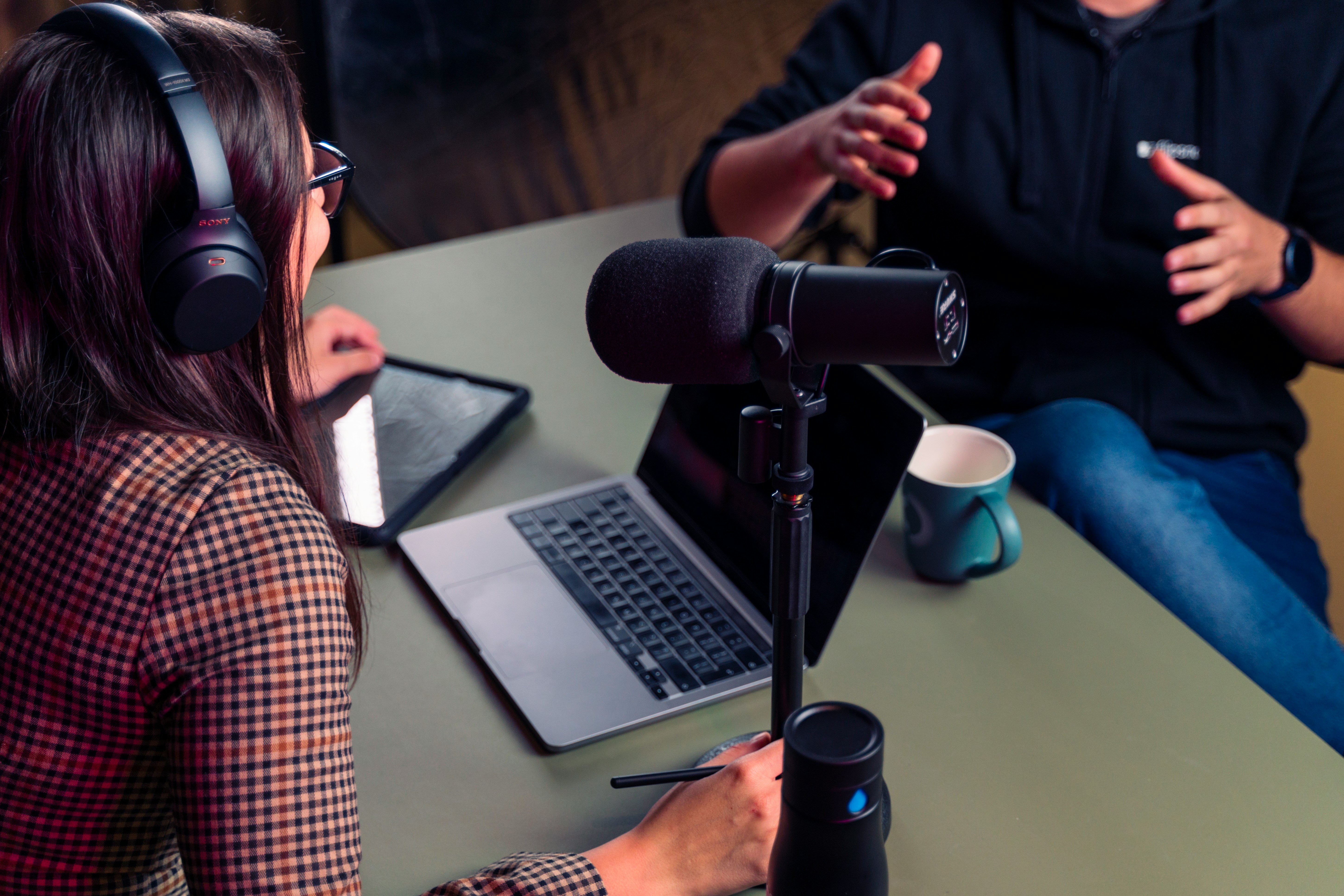
The room hasn't changed. What I do in it before I press record has changed completely.

The version of me that used to write every script by hand
Three years ago I was producing 22 shows across the Podhub network. I was writing every single guest script myself, the night before. Cold open. Show intro. Five question sets. Reflection. Outro. Repeat, for whoever was coming on tomorrow.
It took me about 90 minutes per guest, on a good night. Some nights I'd be doing the third one at 1 AM. The shows that suffered weren't the ones I wrote in the morning. The shows that suffered were the ones I rushed at midnight, where the questions sounded like a template, where the cold open was generic, where the closing was three sentences instead of the slow, considered ending the conversation deserved.
The math wasn't sustainable. 6,500 episodes in, I knew it.
What I actually built (and why this way)
Here's what runs every morning at 10 AM IST now, without me touching it:
It pulls every confirmed meeting from Calendly and Zoho Bookings, across two calendar dates, in the 12 PM to 3 AM IST window. That's a quiet detail that took me months to get right. Most automation tutorials assume one calendar date. Mine doesn't, because half my late-night recordings cross midnight.
For each guest, it reads the show name, the host email, and any intake answers. It maps the host email to the right person. It corrects show names that come through Zoho in odd combined forms. It generates a specific episode topic, not just a generic restate of the show.
Then it writes a full script. Not an outline. A full one. Cold open of 80 to 120 words with emotional texture. Show intro with the host's actual voice. Guest intro with a warm handoff. Five question sets, each with a main question of 60 to 100 words written in spoken-word rhythm, a follow-up that picks up a single thread, and a host reflection that's a statement, never a question. A reflection question. A key takeaway prompt. A guest CTA. An outro of 80 to 120 words that references a specific moment from the conversation.
The whole script goes into a database. By the time I sit down at my desk in the morning, the scripts for today's recordings are waiting for me. I read them. I tweak two lines. I press record.
If you're hosting a podcast right now, you probably know this feeling. It's Sunday night. You've got three guest interviews lined up for the week. You know almost nothing about two of them. You've told yourself you'll prep tomorrow morning. You won't, because Monday will eat you alive.
Have you thought about why this loop keeps happening?
I'd be your guest. I'm about to sit down with you. I'm a little nervous already, because I don't know if you've read my work, if you know what I do, if you've ever thought about my topic for more than the minute it took to book me. You don't know either. We're both walking into the room blind. The conversation will probably be fine. But it won't be great. And neither of us will say that out loud after.
That gap between fine and great is where most podcasters quietly burn out. Not from recording. From prepping.
Pro Tip: If you adapt this stack, add a Step 0 connector health check at the very top. Test every MCP, and if any fail, send yourself an email and stop. The first time your automation silently fails for three days while you assume it's working, you will wish you had this.
Want the exact blueprint?
If you'd like to replicate this on your own podcast, I made a clean PDF. It has:
The full problem framing and architecture in one page
Tools used (Claude, Calendly MCP, Zoho Bookings, Supabase)
The exact SKILL.md prompt that runs every morning
Step-by-step setup for someone who's never built an automation
The edge cases I learned the hard way: after-midnight bookings, multi-host email mapping, Zoho's silent truncation, all of it
Download the Script Automation Daily blueprint (PDF)
Tomorrow
This is Day 1 of a 6-day series. Every morning at 10 AM IST I'll share one more automation from the Podhub stack, with the blueprint to build it yourself. Tomorrow it's the inbox automation that drafts guest replies in my voice while I sleep.
Avik Chakraborty is the founder of Healthy Mind by Avik™ and the Podhub podcast network, home to 21 shows, over 6,500 episodes, and a global audience of more than 200,000 downloads. He writes about building human-first systems for creators who don't want to burn out.
Three questions you can borrow today, even without the automation
Whether or not you ever build this system, you can lift the question structure I use. These three openers do most of the heavy lifting in a real conversation:
"I want to start gently here, because I think the right starting place for this is your story. Not the polished version. The real one. Take us back."
"Something I keep coming back to is the part of this that people don't talk about. What do you think most conversations on this topic miss?"
"I want to sit with this one for a second, because it matters. When this shows up in your everyday life, what does it actually look like?"
Each of these is a doorway, not an extraction. They invite reflection instead of pulling for content. The first one alone has reshaped how every interview opens on Healthy Mind by Avik.
"The automation didn't just buy time. It bought presence. That trade is what most podcasters never make, because they think the cost of building a system like this is too high. It isn't. The cost of not building it is higher."
Avik Chakraborty, Founder, Healthy Mind by Avik and Podhub
Share:


The version of me that used to write every script by hand
Three years ago I was producing 22 shows across the Podhub network. I was writing every single guest script myself, the night before. Cold open. Show intro. Five question sets. Reflection. Outro. Repeat, for whoever was coming on tomorrow.
It took me about 90 minutes per guest, on a good night. Some nights I'd be doing the third one at 1 AM. The shows that suffered weren't the ones I wrote in the morning. The shows that suffered were the ones I rushed at midnight, where the questions sounded like a template, where the cold open was generic, where the closing was three sentences instead of the slow, considered ending the conversation deserved.
The math wasn't sustainable. 6,500 episodes in, I knew it.
What I actually built (and why this way)
Here's what runs every morning at 10 AM IST now, without me touching it:
It pulls every confirmed meeting from Calendly and Zoho Bookings, across two calendar dates, in the 12 PM to 3 AM IST window. That's a quiet detail that took me months to get right. Most automation tutorials assume one calendar date. Mine doesn't, because half my late-night recordings cross midnight.
For each guest, it reads the show name, the host email, and any intake answers. It maps the host email to the right person. It corrects show names that come through Zoho in odd combined forms. It generates a specific episode topic, not just a generic restate of the show.
Then it writes a full script. Not an outline. A full one. Cold open of 80 to 120 words with emotional texture. Show intro with the host's actual voice. Guest intro with a warm handoff. Five question sets, each with a main question of 60 to 100 words written in spoken-word rhythm, a follow-up that picks up a single thread, and a host reflection that's a statement, never a question. A reflection question. A key takeaway prompt. A guest CTA. An outro of 80 to 120 words that references a specific moment from the conversation.
The whole script goes into a database. By the time I sit down at my desk in the morning, the scripts for today's recordings are waiting for me. I read them. I tweak two lines. I press record.
If you're hosting a podcast right now, you probably know this feeling. It's Sunday night. You've got three guest interviews lined up for the week. You know almost nothing about two of them. You've told yourself you'll prep tomorrow morning. You won't, because Monday will eat you alive.
Have you thought about why this loop keeps happening?
I'd be your guest. I'm about to sit down with you. I'm a little nervous already, because I don't know if you've read my work, if you know what I do, if you've ever thought about my topic for more than the minute it took to book me. You don't know either. We're both walking into the room blind. The conversation will probably be fine. But it won't be great. And neither of us will say that out loud after.
That gap between fine and great is where most podcasters quietly burn out. Not from recording. From prepping.
Pro Tip: If you adapt this stack, add a Step 0 connector health check at the very top. Test every MCP, and if any fail, send yourself an email and stop. The first time your automation silently fails for three days while you assume it's working, you will wish you had this.
Want the exact blueprint?
If you'd like to replicate this on your own podcast, I made a clean PDF. It has:
The full problem framing and architecture in one page
Tools used (Claude, Calendly MCP, Zoho Bookings, Supabase)
The exact SKILL.md prompt that runs every morning
Step-by-step setup for someone who's never built an automation
The edge cases I learned the hard way: after-midnight bookings, multi-host email mapping, Zoho's silent truncation, all of it
Download the Script Automation Daily blueprint (PDF)
Tomorrow
This is Day 1 of a 6-day series. Every morning at 10 AM IST I'll share one more automation from the Podhub stack, with the blueprint to build it yourself. Tomorrow it's the inbox automation that drafts guest replies in my voice while I sleep.
Avik Chakraborty is the founder of Healthy Mind by Avik™ and the Podhub podcast network, home to 21 shows, over 6,500 episodes, and a global audience of more than 200,000 downloads. He writes about building human-first systems for creators who don't want to burn out.
Three questions you can borrow today, even without the automation
Whether or not you ever build this system, you can lift the question structure I use. These three openers do most of the heavy lifting in a real conversation:
"I want to start gently here, because I think the right starting place for this is your story. Not the polished version. The real one. Take us back."
"Something I keep coming back to is the part of this that people don't talk about. What do you think most conversations on this topic miss?"
"I want to sit with this one for a second, because it matters. When this shows up in your everyday life, what does it actually look like?"
Each of these is a doorway, not an extraction. They invite reflection instead of pulling for content. The first one alone has reshaped how every interview opens on Healthy Mind by Avik.
"The automation didn't just buy time. It bought presence. That trade is what most podcasters never make, because they think the cost of building a system like this is too high. It isn't. The cost of not building it is higher."
Avik Chakraborty, Founder, Healthy Mind by Avik and Podhub
Share:

Discover More Latest Blogs
Discover More Latest Blogs




Stay Updated and Subscribe to Our Newsletter!
Hey there! Join our newsletter for the latest updates, fun podcast recommendations, and some awesome content delivered straight to your inbox!
Total Listeners
Available on



Stay Updated and Subscribe to Our Newsletter!
Hey there! Join our newsletter for the latest updates, fun podcast recommendations, and some awesome content delivered straight to your inbox!
Total Listeners
Available on
Stay Updated and Subscribe to Our Newsletter!
Hey there! Join our newsletter for the latest updates, fun podcast recommendations, and some awesome content delivered straight to your inbox!
Total Listeners
Available on