

5 Mins Read
Why Mental Health Is a Necessity, Not a Luxury
Most of us learned to treat our minds the way we treat a phone battery at 3 percent. We keep going. We tell ourselves we'll charge later. We push through one more meeting, one more deadline, one more night of bad sleep, and we call it being strong. But here's the honest question almost nobody asks out loud: when did taking care of your own mind start feeling like something you have to earn? Mental health is a necessity, not a luxury. It is not a reward for finishing your work. It is not a spa day you book once a year when you finally crack. It is the ground you stand on while you do everything else. And the longer we treat it as optional, the more expensive that lie becomes.

The Quiet Lie We Were Sold About "Coping"
Somewhere along the way, coping got rebranded as a virtue. We started praising the person who never breaks, who replies to emails at midnight, who shows up smiling the day after a loss. We called it resilience. A lot of the time, it was just suppression wearing a nicer outfit.
Real resilience is not the absence of difficulty. It is the capacity to feel something fully, process it honestly, and keep moving without pretending it didn't happen. That capacity is not infinite, and it is not free. It needs rest, attention, and care, the same way your body needs food and sleep.
When you treat your mind as a luxury, you only attend to it after it has already failed. You wait for the breakdown to give yourself permission to slow down. That is like waiting for the engine to seize before you ever check the oil.
What We Actually Mean When We Say Mental Health Is a Necessity
Let's be clear about the words, because they get blurry.
Mental health is not just the absence of a diagnosis. It is how steadily you can think, feel, relate to people, handle stress, and make decisions that match who you actually are. It shapes how you parent, how you lead, how you love, and how you recover when life knocks you sideways.
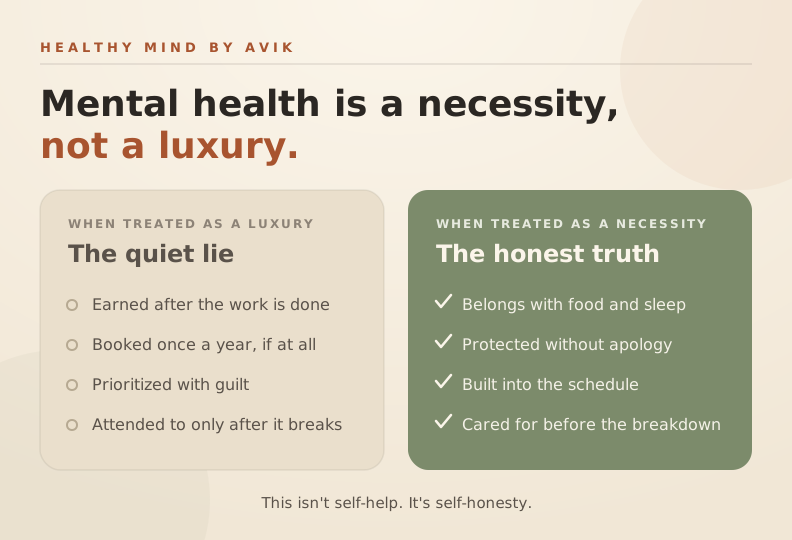
Calling it a necessity means this: it belongs in the same category as eating, sleeping, and breathing. Not the same category as a holiday or a treat. You do not "deserve" sleep only after a productive week. You need it to be a functioning human. Your mind works the same way.
This matters because the language we use quietly decides how we budget our time, our money, and our guilt. When something is a luxury, we feel selfish prioritizing it. When something is a necessity, we protect it without apology.
We were taught to treat our minds like a phone battery at 3 percent: keep going, charge later. But mental health is a necessity, not a luxury. Here's the honest case for caring for yourself before the breakdown, not after.
Pro Tip: Don't wait to feel "bad enough" to deserve care. Pick one small thing this week and give it real calendar time, the same way you'd protect a meeting you can't miss. Necessities get scheduled. Luxuries get postponed. Where your wellbeing lands on that list tells you exactly how you've been treating it.
The Real Cost of Treating Your Mind as Optional
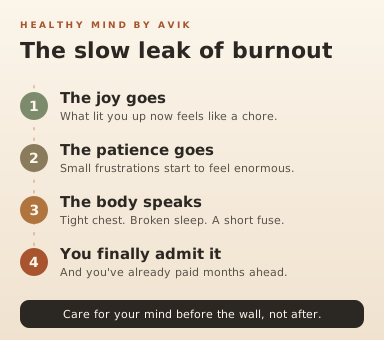
Burnout does not arrive like a thunderclap. It arrives like a slow leak.
First the joy goes. The things that used to light you up feel like chores. Then the patience goes, and small frustrations start feeling enormous. Then the body starts speaking, because the mind has been ignored for too long. Tight chest. Broken sleep. A short fuse with the people you love most.
By the time most people admit something is wrong, they have already paid for months in advance. Strained relationships. Decisions made from exhaustion instead of clarity. A career that looks fine on paper and feels hollow on the inside.
Here is the part we rarely say in professional settings: ignoring your mental health is not the responsible choice. It only looks responsible because it is invisible until it is not. The cost is real. We just defer the bill.
This Isn't Self-Help. It's Self-Honesty.
A lot of mental wellness content promises to fix you in five steps before lunch. That is not what this is.
You cannot affirmation your way out of something you refuse to look at. The work is quieter and harder than that. It starts with telling yourself the truth about how you actually feel, not how you think you should feel.
Self-honesty sounds like this. I am not fine, and I have been pretending I am. I am tired in a way sleep doesn't fix. I am angry and I have been calling it busy. I am grieving something and I never gave myself room to.
None of that requires a label or a clinical verdict. It just requires you to stop negotiating with your own reality. That single act, naming the truth without flinching, is where almost all real healing begins.
How to Start Treating Mental Health as a Necessity
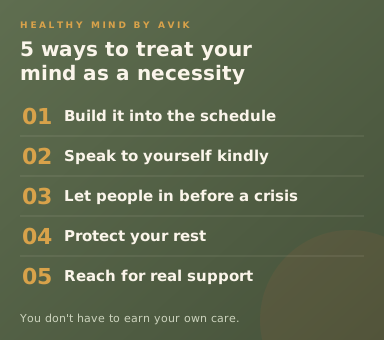
You do not need to overhaul your life this week. You need to stop treating your inner world as the last item on a list that never ends. A few honest starting points:
Build it into the schedule, not around it. Necessities get calendar time. If your wellbeing only happens when everything else is finished, it will never happen, because the list is never finished.
Notice the language you use on yourself. The voice in your head is a habit, and habits can change. Talking to yourself the way you would talk to someone you love is not soft. It is accurate, because you are someone worth that care.
Let people in before the crisis, not just during it. Connection is not a backup plan for when you fall apart. It is the thing that keeps you from falling apart in the first place. One real conversation can do more than a month of pushing through alone.
Protect your rest like it matters, because it does. Rest is not a gap between productive things. It is part of what makes the productive things possible and sustainable.
Reach for real support when you need it. Talking to a trained professional is not a sign that you have failed. It is the same logic as seeing a doctor for a body that hurts. Necessities deserve expert care.
A Quiet Invitation
I have spent years sitting with these conversations. Across 21 shows, 6,500-plus episodes, and a global audience of more than 200,000 people, the pattern is almost always the same. The strongest people in the room are usually the most exhausted, because they have been carrying their minds as an afterthought for years.
So here is the invitation, gently. Stop waiting for permission. You do not have to hit a wall before you are allowed to care for yourself. Your mind is not a luxury you visit once it breaks. It is the home you live in every single day.
Treat it like a necessity. Not because you have earned it, but because you were always worth it.
Frequently Asked Questions
Is mental health a necessity or a luxury? Mental health is a necessity, not a luxury. It directly affects how you think, feel, work, and relate to others, which places it in the same essential category as sleep, food, and physical health rather than as an occasional treat or reward.
Why do people treat mental health as optional? Many of us were taught to value endurance and to see "coping" as a virtue, which trained us to ignore emotional needs until a breakdown forces attention. The problem is invisible until it is severe, so the cost gets deferred rather than avoided.
What is the difference between self-help and self-honesty? Self-help often promises quick fixes and external steps. Self-honesty starts earlier and deeper, by naming how you actually feel without judgment or pretending. Lasting change tends to begin with that honest acknowledgment rather than with a five-step formula.
How can I start prioritizing my mental health without a major life change? Begin small. Give your wellbeing real calendar time, soften the way you speak to yourself, let people in before a crisis, protect your rest, and reach for professional support when you need it. These are sustainable shifts, not an overnight overhaul.
Does prioritizing mental health hurt productivity? The opposite tends to be true over time. Decisions made from exhaustion are costly, while clarity and steadiness produce better, more sustainable work. Caring for your mind supports performance rather than competing with it.
Share:


The Quiet Lie We Were Sold About "Coping"
Somewhere along the way, coping got rebranded as a virtue. We started praising the person who never breaks, who replies to emails at midnight, who shows up smiling the day after a loss. We called it resilience. A lot of the time, it was just suppression wearing a nicer outfit.
Real resilience is not the absence of difficulty. It is the capacity to feel something fully, process it honestly, and keep moving without pretending it didn't happen. That capacity is not infinite, and it is not free. It needs rest, attention, and care, the same way your body needs food and sleep.
When you treat your mind as a luxury, you only attend to it after it has already failed. You wait for the breakdown to give yourself permission to slow down. That is like waiting for the engine to seize before you ever check the oil.
What We Actually Mean When We Say Mental Health Is a Necessity
Let's be clear about the words, because they get blurry.
Mental health is not just the absence of a diagnosis. It is how steadily you can think, feel, relate to people, handle stress, and make decisions that match who you actually are. It shapes how you parent, how you lead, how you love, and how you recover when life knocks you sideways.
Calling it a necessity means this: it belongs in the same category as eating, sleeping, and breathing. Not the same category as a holiday or a treat. You do not "deserve" sleep only after a productive week. You need it to be a functioning human. Your mind works the same way.
This matters because the language we use quietly decides how we budget our time, our money, and our guilt. When something is a luxury, we feel selfish prioritizing it. When something is a necessity, we protect it without apology.
We were taught to treat our minds like a phone battery at 3 percent: keep going, charge later. But mental health is a necessity, not a luxury. Here's the honest case for caring for yourself before the breakdown, not after.
Pro Tip: Don't wait to feel "bad enough" to deserve care. Pick one small thing this week and give it real calendar time, the same way you'd protect a meeting you can't miss. Necessities get scheduled. Luxuries get postponed. Where your wellbeing lands on that list tells you exactly how you've been treating it.
The Real Cost of Treating Your Mind as Optional
Burnout does not arrive like a thunderclap. It arrives like a slow leak.
First the joy goes. The things that used to light you up feel like chores. Then the patience goes, and small frustrations start feeling enormous. Then the body starts speaking, because the mind has been ignored for too long. Tight chest. Broken sleep. A short fuse with the people you love most.
By the time most people admit something is wrong, they have already paid for months in advance. Strained relationships. Decisions made from exhaustion instead of clarity. A career that looks fine on paper and feels hollow on the inside.
Here is the part we rarely say in professional settings: ignoring your mental health is not the responsible choice. It only looks responsible because it is invisible until it is not. The cost is real. We just defer the bill.
This Isn't Self-Help. It's Self-Honesty.
A lot of mental wellness content promises to fix you in five steps before lunch. That is not what this is.
You cannot affirmation your way out of something you refuse to look at. The work is quieter and harder than that. It starts with telling yourself the truth about how you actually feel, not how you think you should feel.
Self-honesty sounds like this. I am not fine, and I have been pretending I am. I am tired in a way sleep doesn't fix. I am angry and I have been calling it busy. I am grieving something and I never gave myself room to.
None of that requires a label or a clinical verdict. It just requires you to stop negotiating with your own reality. That single act, naming the truth without flinching, is where almost all real healing begins.
How to Start Treating Mental Health as a Necessity
You do not need to overhaul your life this week. You need to stop treating your inner world as the last item on a list that never ends. A few honest starting points:
Build it into the schedule, not around it. Necessities get calendar time. If your wellbeing only happens when everything else is finished, it will never happen, because the list is never finished.
Notice the language you use on yourself. The voice in your head is a habit, and habits can change. Talking to yourself the way you would talk to someone you love is not soft. It is accurate, because you are someone worth that care.
Let people in before the crisis, not just during it. Connection is not a backup plan for when you fall apart. It is the thing that keeps you from falling apart in the first place. One real conversation can do more than a month of pushing through alone.
Protect your rest like it matters, because it does. Rest is not a gap between productive things. It is part of what makes the productive things possible and sustainable.
Reach for real support when you need it. Talking to a trained professional is not a sign that you have failed. It is the same logic as seeing a doctor for a body that hurts. Necessities deserve expert care.
A Quiet Invitation
I have spent years sitting with these conversations. Across 21 shows, 6,500-plus episodes, and a global audience of more than 200,000 people, the pattern is almost always the same. The strongest people in the room are usually the most exhausted, because they have been carrying their minds as an afterthought for years.
So here is the invitation, gently. Stop waiting for permission. You do not have to hit a wall before you are allowed to care for yourself. Your mind is not a luxury you visit once it breaks. It is the home you live in every single day.
Treat it like a necessity. Not because you have earned it, but because you were always worth it.
Frequently Asked Questions
Is mental health a necessity or a luxury? Mental health is a necessity, not a luxury. It directly affects how you think, feel, work, and relate to others, which places it in the same essential category as sleep, food, and physical health rather than as an occasional treat or reward.
Why do people treat mental health as optional? Many of us were taught to value endurance and to see "coping" as a virtue, which trained us to ignore emotional needs until a breakdown forces attention. The problem is invisible until it is severe, so the cost gets deferred rather than avoided.
What is the difference between self-help and self-honesty? Self-help often promises quick fixes and external steps. Self-honesty starts earlier and deeper, by naming how you actually feel without judgment or pretending. Lasting change tends to begin with that honest acknowledgment rather than with a five-step formula.
How can I start prioritizing my mental health without a major life change? Begin small. Give your wellbeing real calendar time, soften the way you speak to yourself, let people in before a crisis, protect your rest, and reach for professional support when you need it. These are sustainable shifts, not an overnight overhaul.
Does prioritizing mental health hurt productivity? The opposite tends to be true over time. Decisions made from exhaustion are costly, while clarity and steadiness produce better, more sustainable work. Caring for your mind supports performance rather than competing with it.
Share:

Discover More Latest Blogs
Discover More Latest Blogs




Stay Updated and Subscribe to Our Newsletter!
Hey there! Join our newsletter for the latest updates, fun podcast recommendations, and some awesome content delivered straight to your inbox!

Total Listeners
Available on




Stay Updated and Subscribe to Our Newsletter!
Hey there! Join our newsletter for the latest updates, fun podcast recommendations, and some awesome content delivered straight to your inbox!
Total Listeners
Available on
Stay Updated and Subscribe to Our Newsletter!
Hey there! Join our newsletter for the latest updates, fun podcast recommendations, and some awesome content delivered straight to your inbox!
Total Listeners
Available on