

Scientists may have found an answer to one of neuroscience's oldest puzzles. The human brain's left hemisphere controls the right side of the body, and the right hemisphere controls the left. Researchers now believe this odd arrangement dates back more than 500 million years to the visual systems of ancient fish, and that it wasn't designed for any particular advantage. It's simply how evolution built on what came before.
The discovery offers a humbling reminder that our brains aren't engineered from scratch. They're built on layers of ancient biology, each generation inheriting what worked well enough to survive.
An evolutionary accident, not a design choice
Most of us assume that every feature of the brain must serve some purpose. Why else would such a complex system wire itself in such a counterintuitive way? But the researchers behind this study suggest the brain's cross-wiring might not have evolved to solve a problem at all. Instead, it appears to be a byproduct of how early vertebrates processed visual information.
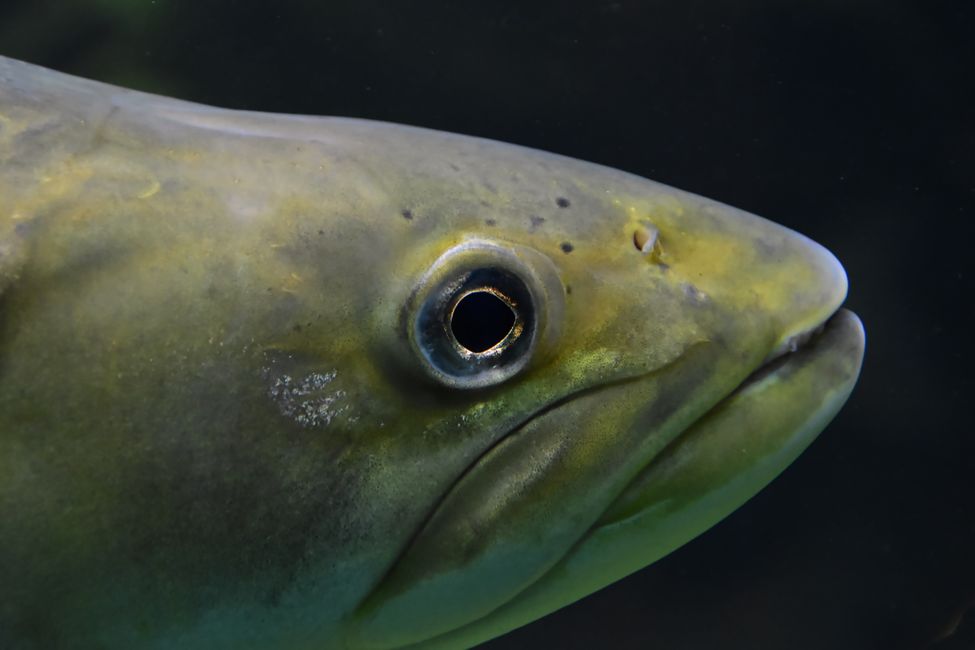
Photo: Joerg Hartmann · Pexels
Ancient fish needed to track movement and navigate their environment. Their visual systems laid down neural pathways that crossed from one side to the other, likely as a straightforward way to process signals from both eyes. When later vertebrates developed more sophisticated brains, those new circuits were built on top of the old wiring. The crossed arrangement stuck, not because it was optimal, but because changing it would have meant rebuilding the entire system from the ground up.
Evolution rarely starts over. It tinkers with what's already there, which is why scientists discover how our brains find the words we need through systems that evolved for other purposes long before language existed.
What this means for how we understand the brain
The research doesn't change how the brain works today, but it does shift how we think about it. For decades, neuroscientists have searched for functional reasons behind the brain's crossed wiring. Some theories proposed that it helps with spatial reasoning or coordination. Others suggested it might improve reaction times. This new explanation suggests those benefits, if they exist, are happy accidents.
The finding also highlights how much of our neurology is shaped by history rather than purpose. Just as a tiny brain region has been keeping secrets about how we learn and focus, the broader architecture of the brain reflects millions of years of evolutionary compromise and inheritance.
Understanding this legacy matters for anyone studying brain health and resilience. When we know that certain neural arrangements weren't designed to be perfect, we can approach challenges like stroke recovery or neuroplasticity with more realistic expectations. The brain is remarkably adaptable, but it's also working within constraints set half a billion years ago.
Photo: RDNE Stock project · Pexels
Ancient wiring, modern implications
The cross-wiring of the brain also reminds us how interconnected our body systems really are. Researchers studying how our brains age have found clues in unexpected places, showing that understanding one part of our biology often means looking far beyond it.
For people living with conditions that affect one side of the body, understanding the evolutionary roots of brain organisation doesn't offer treatment, but it does offer context. When a stroke damages one hemisphere and affects the opposite side of the body, that pattern isn't random. It's the same wiring that helped ancient creatures survive in oceans that no longer exist.
Modern neuroscience continues to map these inherited systems in ever greater detail. Researchers have even managed to grow miniature brain circuits that communicate with each other in laboratory settings, helping us understand how these ancient patterns still function today.
Why it matters
This research won't change how you move your hand or process what you see. But it offers a different lens for thinking about the brain, one that's less about perfect design and more about deep history. Our minds carry the signature of creatures that lived before the first trees, before the first footprints on land.
For anyone interested in how we think, feel and respond to the world, this study is a reminder that our brains are doing their best with very old equipment. That context can be strangely comforting. When your brain feels complicated or confusing, it's partly because it's been cobbled together over unimaginable stretches of time, layer by layer, with no master plan.
Listen next

Based on reporting from sciencedaily.com.

For the PodHub Journal. Stories and research on the mind, from the team behind the network's podcasts.


Comments
Loading comments…