

If you've ever woken from a dream that felt oddly familiar yet completely impossible, you weren't imagining things. A large new study suggests that our dreams are far from the random mental static we sometimes assume them to be. Instead, they're carefully constructed narratives that reveal something deeper about how our minds make sense of experience.
Researchers analysed more than 3,700 reports from people describing both their dreams and their waking lives. What they found challenges the old idea that dreams are just leftover noise from a busy day. The sleeping brain doesn't simply replay what happened. It remixes memories, emotions, imagined futures, and familiar places into brand new scenarios that feel vivid and real, even when they're utterly surreal.
Dreams as personal storytelling
The study found that dreams are shaped by two major forces: our individual personalities and the world we move through each day. This means that what you dream about isn't arbitrary. It's connected to who you are, what matters to you, and what's happening in your life, even if the dream itself involves flying over your childhood home or having a conversation with someone you haven't seen in years.
This makes intuitive sense to anyone who's noticed patterns in their own dreams. The anxious dreamer might find themselves late for an exam they never studied for. The grieving person might encounter a lost loved one in a familiar setting. The creative mind might solve a problem or stumble onto an idea that feels like a gift from the unconscious.
What the research adds is evidence that these aren't coincidences. The brain during sleep is actively working with the raw material of your inner and outer life, weaving it into something new.
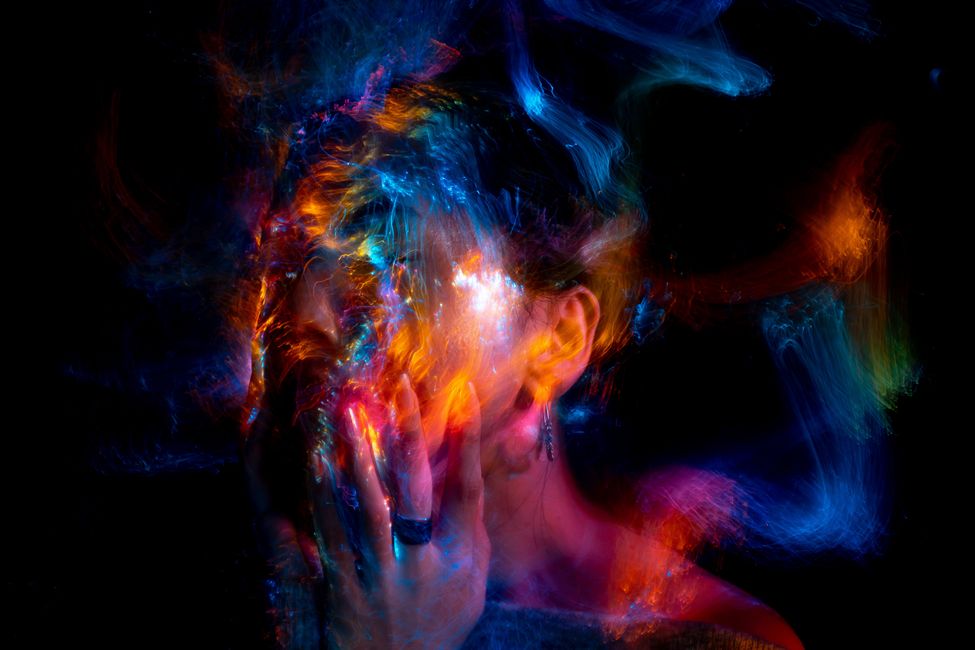
*Photo: Merlin Lightpainting · Pexels*
Not replay, but reconstruction
One of the most interesting findings is that dreams don't just replay daily events. If they did, we'd all be dreaming about commutes and grocery lists. Instead, the dreaming brain takes fragments of memory, threads of emotion, and threads of possibility, and constructs entirely new experiences.
This process might sound chaotic, but it appears to serve a purpose. By mixing what has happened with what could happen, and by placing familiar people in unfamiliar contexts, dreams may help us process emotions, rehearse responses, and integrate experiences in ways that waking thought can't quite manage.
The study didn't explore why the brain does this, but it offers a window into how. Dreams aren't a glitch. They're a feature of a mind that's constantly making meaning, even when we're asleep.
What this means for how we understand ourselves
For anyone interested in self-awareness or emotional wellbeing, this research is quietly significant. It suggests that paying attention to dreams isn't superstition or navel-gazing. It's another way of listening to yourself.
You don't need to interpret every symbol or keep a detailed dream journal, though some people find that helpful. But noticing the recurring themes, the emotional tone, or the people who show up in your dreams can offer clues about what's unresolved, what's shifting, or what matters more than you've been willing to admit during the day.

*Photo: Maria Mileta · Pexels*
Dreams also remind us that the mind is more than logic and problem-solving. It's imaginative, associative, and deeply personal. In a world that often rewards efficiency and clarity, dreams are a reminder that meaning-making happens in messier, more mysterious ways too.
For podcasters and creators exploring themes of mental health, creativity, or human connection, this research opens up rich territory. Dreams are a universal experience, yet deeply individual. They're a place where science meets story, where the brain's mechanics meet the heart's concerns.
Understanding that dreams are shaped by personality and environment also means they can shift. As we change, as our circumstances evolve, so too might the landscapes we wander through at night. That's both humbling and hopeful.
The study doesn't suggest dreams predict the future or hold hidden messages that need decoding. But it does suggest they're worth noticing. They're one more way the brain tries to make sense of being alive, of being you, in this particular moment.
If nothing else, this research is an invitation to be a little more curious about what happens when you close your eyes. Your dreams aren't random. They're your brain's way of rewriting reality, one strange, vivid, deeply personal story at a time.
Based on reporting from sciencedaily.com.



Comments
Loading comments…