

We tend to think of consciousness as a switch: you're either awake and aware, or you're not. But new findings from researchers studying patients under general anesthesia suggest the reality is far more nuanced. The unconscious brain, it turns out, is doing much more than we ever imagined.
In a study that challenges long-held assumptions about what happens when we go under, scientists discovered that people under general anesthesia could still process language at a remarkably complex level. While patients lay unconscious, their brains distinguished between different types of words, recognising nouns, verbs, and adjectives as they listened to stories. Even more striking, neural activity suggested their brains were attempting to predict what words might come next, before those words were actually spoken.
The Conscious Mind Isn't the Whole Story
For decades, consciousness research has operated on the assumption that certain cognitive abilities simply disappear when we lose awareness. Language processing, prediction, and meaning-making were thought to require the full light of conscious attention. This new research turns that assumption on its head.
The findings don't mean that people under anesthesia are secretly aware or suffering. Rather, they reveal that the brain continues certain sophisticated operations even when the experience of being conscious has switched off. It's a bit like discovering that a building's electrical system keeps running even when all the lights are out.
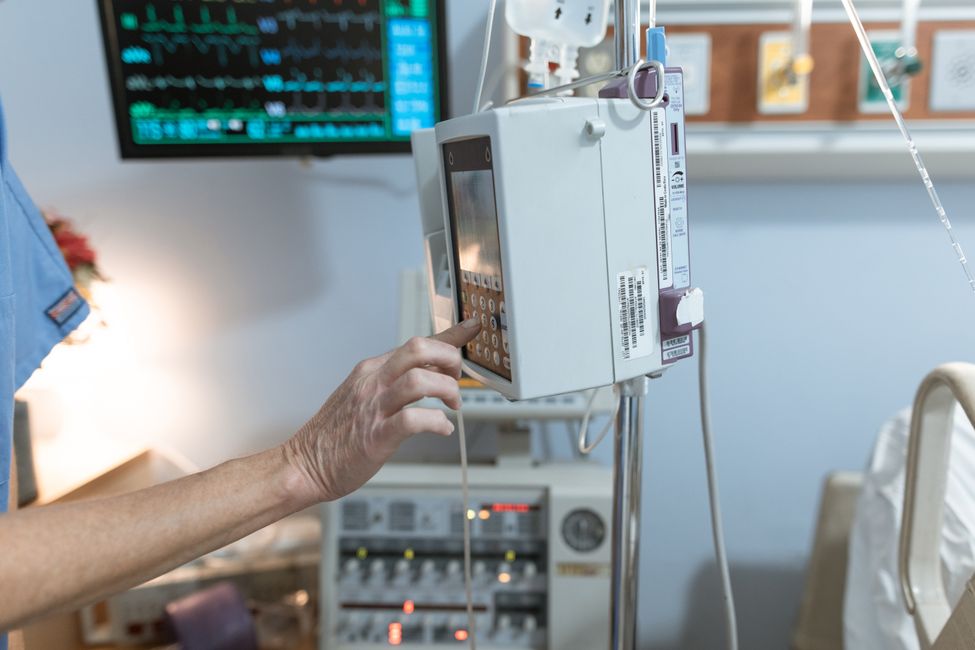
*Photo: RDNE Stock project · Pexels*
This matters because it changes how we understand the relationship between brain activity and subjective experience. The two aren't as tightly coupled as we once believed. Your brain can be doing complex linguistic work, sorting words into categories and making predictions about what comes next, without you having any conscious experience of hearing or understanding anything at all.
What It Means for How We Think About Awareness
The implications reach beyond the operating theatre. If sophisticated language processing can happen without consciousness, what else might be going on beneath the surface of our awareness? The research hints at a deeper truth about human cognition: much of what our brains do happens outside the spotlight of conscious attention.
We already know this in everyday life, of course. You can drive a familiar route while lost in thought, your brain handling the complex task of navigation without conscious effort. You can catch yourself mid-sentence, your mouth having chosen words before you consciously decided what to say. But finding this kind of processing continuing even under anesthesia suggests the unconscious mind is even more capable than we realised.
The researchers also point to potential applications for brain-computer interfaces. If the brain continues processing language in predictable ways even when consciousness is switched off, it might be possible to develop new forms of communication for people who cannot speak or move. The technology is still theoretical, but the principle is there: the brain's language systems keep working, even in silence.

*Photo: Pachon in Motion · Pexels*
A Humbler View of Consciousness
Perhaps the most profound takeaway is what this research says about consciousness itself. We tend to place it at the centre of everything, assuming it's the engine that drives all our sophisticated thinking. But these findings suggest consciousness might be more like a passenger, observing and experiencing what the brain is already doing.
That doesn't diminish the importance of conscious experience. Being aware, feeling, and experiencing remain central to what makes us human. But it does suggest a more humble view: consciousness is one part of a much larger system, and the brain's capacity for complexity extends well beyond what we can consciously access.
For those of us interested in the mind and how it works, this research opens fascinating questions. How much of our daily mental life happens outside awareness? When we have a sudden insight or a word on the tip of our tongue, is that the conscious mind finally catching up with work the unconscious brain has already done? And if our brains are constantly predicting what comes next, how much of what we experience as the present moment is actually our brain's best guess about what's about to happen?
The study reminds us that the mind is far stranger and more layered than it appears from the inside. Even in our deepest unconsciousness, something essential keeps working, sorting meaning from sound, finding patterns in language, reaching toward what comes next.
For podcasters and audio creators, there's something quietly affirming here too. The stories we tell, the words we choose, the rhythm of language we craft—all of it reaches deeper than conscious attention. Even when listeners aren't fully focused, even in states where awareness itself has faded, the brain continues its patient work of making meaning from what it hears.
Based on reporting from sciencedaily.com.



Comments
Loading comments…