
If you've ever thought "I'm just not a language person," you're not alone. Plenty of us carry around the belief that we lack some special talent for picking up new tongues, often based on memories of stressful school lessons or the embarrassment of mispronouncing a word in front of others. But language experts are pushing back against this idea, arguing that a handful of persistent myths are what really hold people back, not any lack of ability.
According to researchers, the problem isn't our brains. It's the stories we tell ourselves about what language learning should look like, and how hard we think it has to be.
The myths that keep us stuck
The first myth is the belief that you need perfect grammar before you can actually communicate. Many of us were taught languages through textbook drills and conjugation tables, which made accuracy feel like the only goal. But experts point out that real human connection happens through messy, imperfect conversation. Native speakers make mistakes all the time. What matters is getting your meaning across, not reciting flawless sentences.
Another common myth is that you need to start young, or you've missed your chance. While children do absorb languages naturally, adults bring advantages of their own: better focus, richer context for understanding culture, and the motivation that comes from choosing to learn. Age isn't the barrier we think it is.
Then there's the fear of making mistakes, which can be paralysing. The worry about sounding silly or getting something wrong often stops people from practising at all. But language is learned through use, not through silent study. Every stumble is part of the process, not proof that you're failing.
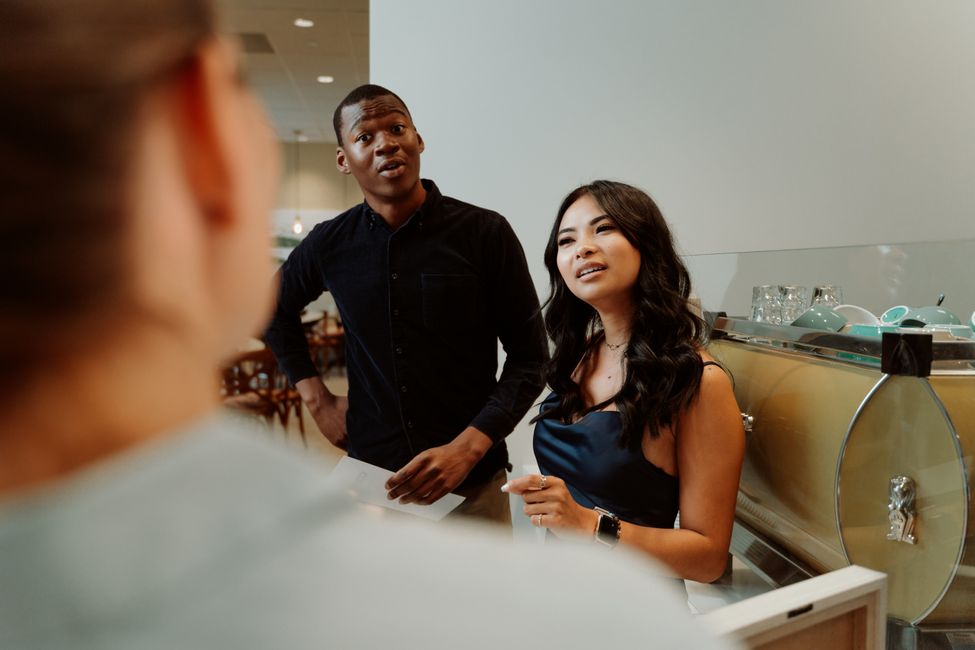
*Photo: RDNE Stock project · Pexels*
A different way to learn
What's changed in recent years is how accessible language learning has become, and how much more human it feels. Modern apps have turned practice into something you can do on a morning commute or during a lunch break. Entertainment, from subtitled films to podcasts in other languages, lets you absorb rhythm and tone without sitting at a desk. Travel, even short trips, offers immersion that textbooks never could.
But perhaps most importantly, online communities have made it possible to connect with speakers around the world. You can video chat with someone learning your language while you learn theirs. You can join forums where people share slang, idioms, and the kind of everyday phrases that make a language come alive. Learning has become social again, less about memorising rules and more about building relationships.
Experts emphasise that culture and connection are at the heart of why we learn languages in the first place. It's not really about conjugating verbs. It's about understanding a joke, following a story, asking someone about their day. When learning feels like a route to human connection rather than a test to pass, it stops being a chore and starts being something else entirely: surprisingly fun.
Why it's worth another try
For many people, the myths around language learning have become a kind of self-fulfilling prophecy. We believe we're bad at it, so we avoid trying, which means we never get better, which confirms what we thought all along. Breaking that cycle starts with letting go of the idea that there's a right way to learn, or that fluency is the only measure of success.
Even learning a handful of phrases can open doors. It signals respect when you travel. It builds empathy as you see how another culture organises thought and meaning. It connects you to family history, to communities you want to understand, to parts of the world that feel distant until you can speak even a little of the language.
The shift experts are calling for isn't about adding more pressure. It's about lowering the stakes. You don't need to be perfect. You don't need to sound like a native speaker. You just need to be willing to try, to stumble, to laugh at yourself, and to keep going.
For podcasters and creators, this matters too. Language learning is deeply tied to curiosity, humility, and the willingness to be a beginner again. Those are qualities that make for richer storytelling and more genuine connection with audiences. And for anyone working on their own wellbeing, the act of learning something new, of reaching across a cultural divide, of proving to yourself that growth is still possible, can be quietly transformative.
The myths that tell us we're no good at languages are just that: myths. The real story is that connection, not perfection, is what makes language worth learning at all.
Based on reporting from sciencedaily.com.



Comments
Loading comments…