
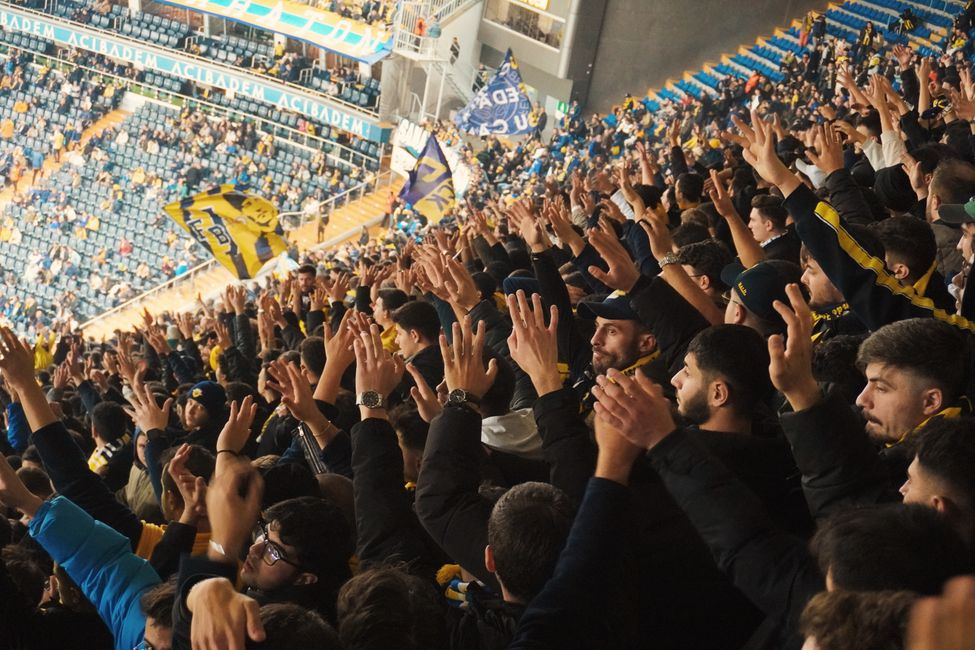
Anyone who has watched a crucial match knows the feeling. Your team scores and the room erupts. Your team loses and the rest of the evening feels flat, maybe even ruined. A new study scanning the brains of football fans reveals why these reactions run so deep, and what it tells us about passion, loyalty, and the line between healthy excitement and something more volatile.
Researchers examined what happens inside supporters' heads when their team wins or loses. The findings show that victories light up reward centres in the brain, flooding fans with bursts of positive feeling. Losses, meanwhile, suppress the brain's control signals, the circuits that usually help us keep perspective and regulate our responses. In other words, when your side is beaten, the parts of your brain responsible for staying calm and rational take a step back.
When loyalty overrides logic
The study highlights how deeply tribal allegiance can shape our emotional lives. Football fandom is not just entertainment. For many supporters, it becomes woven into identity. The colours you wear, the songs you sing, the community you belong to on match day—all of these feed into circuits in the brain that treat your team's fortunes as your own.
What makes this research particularly striking is the suggestion that the same neural pathways fuelling sports passion may also underpin other forms of intense group loyalty. Political movements, social causes, even online communities can activate similar brain activity. The mechanisms that make us cheer for a goal might be the same ones that make us argue fiercely over beliefs, or feel genuine distress when our side loses ground in any arena.

*Photo: MART PRODUCTION · Pexels*
The researchers point to rivalry as a key ingredient in this emotional cocktail. It is not just about supporting your team; it is about opposing the other. That opposition can sharpen the highs and deepen the lows. When control signals in the brain are dampened during a loss, fans may find it harder to brush off disappointment or manage frustration. For some, that might mean a quiet evening. For others, it can tip into anger or even aggression.
Early experiences shape the wiring
The study also suggests that how these brain circuits develop depends significantly on early experiences. The way we first encounter competition, loyalty, and group belonging can influence whether our passion remains a source of joy or becomes something more combustible. A childhood surrounded by good-natured rivalry may wire the brain differently than one marked by hostility or pressure.
This does not mean fandom is dangerous or unhealthy. Millions of people find genuine connection, meaning, and happiness through supporting a team. The research simply maps the underlying biology, showing why the stakes can feel so high and why emotions can run so intense. Understanding the mechanics does not diminish the experience; it offers insight into why we care so much.

*Photo: Artem Kulinych · Pexels*
What this means for our emotional lives
The implications stretch beyond the stadium. If the same brain systems govern sports loyalty and other forms of passionate attachment, then recognising these patterns in ourselves becomes valuable. We might notice when a political debate feels less like a conversation and more like a rivalry match. We might catch ourselves treating a disagreement as a win-or-lose scenario, rather than an exchange of ideas.
The research also offers a reminder that our brains are not neutral observers. They are shaped by what we experience, by the groups we join, and by the stories we tell ourselves about who belongs on our side. Awareness of these processes does not mean suppressing passion or pretending not to care. It means recognising when our emotions are being driven by circuits designed for survival and belonging, not necessarily for clarity or fairness.
For anyone interested in mental wellness, this study is a quiet invitation to notice how group identity affects mood and behaviour. It is worth asking ourselves occasionally: am I responding to what is actually happening, or to the way my brain has learned to treat wins and losses? That small moment of reflection can be the difference between healthy enthusiasm and reactions we later regret.
The beauty of football, and of any shared passion, lies in the connection it creates. The science does not take that away. It simply shows us the wiring underneath, and in doing so, gives us a chance to understand ourselves a little better.
Based on reporting from sciencedaily.com.



Comments
Loading comments…