

If you've ever wondered why one mental health challenge so often seems to invite others along for the ride, a major genetics study is offering some answers. Researchers have mapped the genetic underpinnings of 14 psychiatric conditions across more than six million people worldwide, and what they found reshapes how we might think about mental illness itself.
The headline finding: these conditions don't exist in tidy, separate boxes. Instead, they share deep biological roots, clustering into five overlapping families. It helps explain something clinicians have observed for decades but struggled to fully understand—why depression and anxiety travel together, why PTSD and substance use disorders so often overlap, why someone living with bipolar disorder might also face other struggles.
The five families of mental health conditions
Rather than treating each diagnosis as a standalone island, the research reveals that psychiatric conditions group into broader families based on their genetic architecture. While the source material doesn't spell out all five categories in detail, the implication is clear: conditions we've historically separated in diagnostic manuals are actually biological cousins, sharing genetic variants that influence brain function, stress response, and emotional regulation.
This isn't about reducing complex human experience to genetics alone. Environmental factors, trauma, relationships, and life circumstances all matter profoundly. But the genetic layer provides a biological explanation for patterns many people recognise in their own lives—the way one diagnosis can seem to open the door to another, or how treatment for one condition sometimes eases symptoms of another.
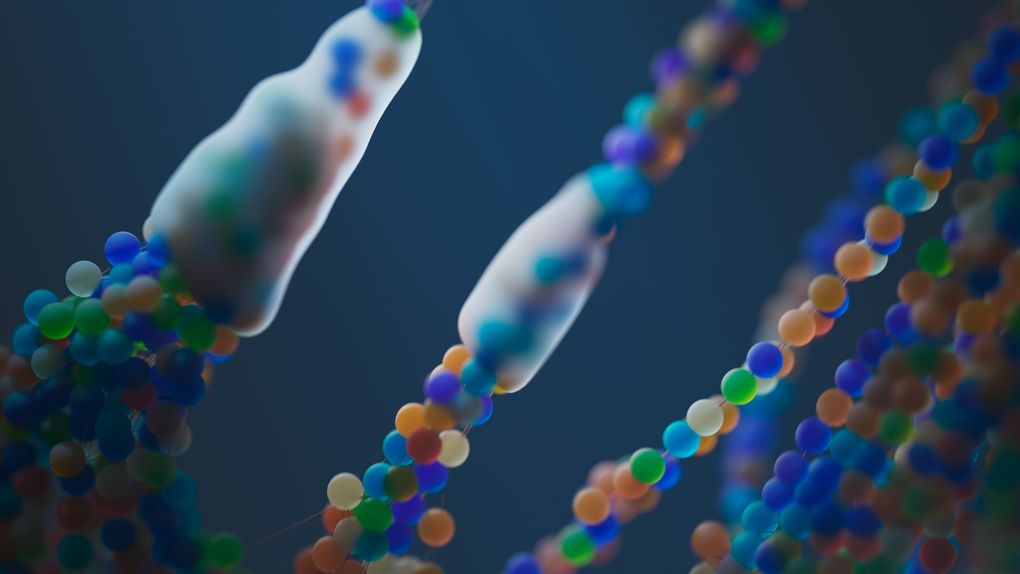
*Photo: Google DeepMind · Pexels*
The scale of this study is worth pausing on. Six million people is an enormous sample, drawn from populations around the world. That size matters because genetic research needs large numbers to detect patterns that hold true across different groups and backgrounds. It's the kind of collaborative, cross-border science that takes years to coordinate and represents thousands of individual stories contributing to collective understanding.
What this means for the way we think about diagnosis
For anyone who's felt confused or even ashamed about having multiple diagnoses, this research offers a kind of permission to see your experience as coherent rather than chaotic. It's not that you're uniquely complicated or that something is wrong with how you're responding to treatment. Your brain's biology may simply make you vulnerable across a spectrum of related conditions.
The findings also raise questions about how we diagnose and treat mental health conditions in the first place. If depression, anxiety, and PTSD share significant genetic overlap, does it make sense to treat them as entirely separate problems requiring entirely different approaches? Some researchers and clinicians have already been moving toward transdiagnostic treatments—therapies that target underlying processes like emotional regulation or stress response rather than specific diagnostic labels. This genetic evidence provides biological support for that shift.
It's worth noting what this research doesn't claim. Genetics aren't destiny. Having genetic variants associated with depression doesn't mean you'll definitely experience it, just as not having those variants doesn't make you immune. Mental health emerges from a complex interaction between biology, experience, environment, and choice. What genetics can do is help explain vulnerability and point toward why certain patterns persist across families and populations.

*Photo: Elena Golovchenko · Pexels*
A more complete picture of mental wellness
For those of us working in mental health communication and support, this research reinforces something important: people's experiences are valid even when they don't fit neatly into diagnostic categories. The person dealing with anxiety who also struggles with sleep, substance use, and low mood isn't failing at recovery—they're navigating a set of interconnected challenges that share biological roots.
It also suggests that comprehensive, holistic approaches to mental wellness make sense not just philosophically but biologically. Supporting someone's overall stress response, sleep quality, social connection, and physical health may help across multiple conditions precisely because those conditions are related at a fundamental level.
The research comes from a global collaboration, published findings that represent years of data collection and analysis. You can read more about the study at ScienceDaily.
For podcasters and creators in the mental wellness space, this research offers a framework for talking about mental health that moves beyond rigid diagnostic categories. It validates the messy, overlapping nature of real human experience while grounding that experience in biology. It's a reminder that when someone says they're dealing with multiple things at once, that's not a sign of weakness or confusion—it's often how these conditions actually work.
The ultimate takeaway is both humbling and hopeful. Mental health challenges are complex and interconnected, but that complexity isn't random. The more we understand these biological patterns, the better we can support people through them with compassion, precision, and recognition that struggling in multiple ways at once is part of a coherent story, not a personal failing.
Based on reporting from sciencedaily.com.

Comments
Loading comments…