
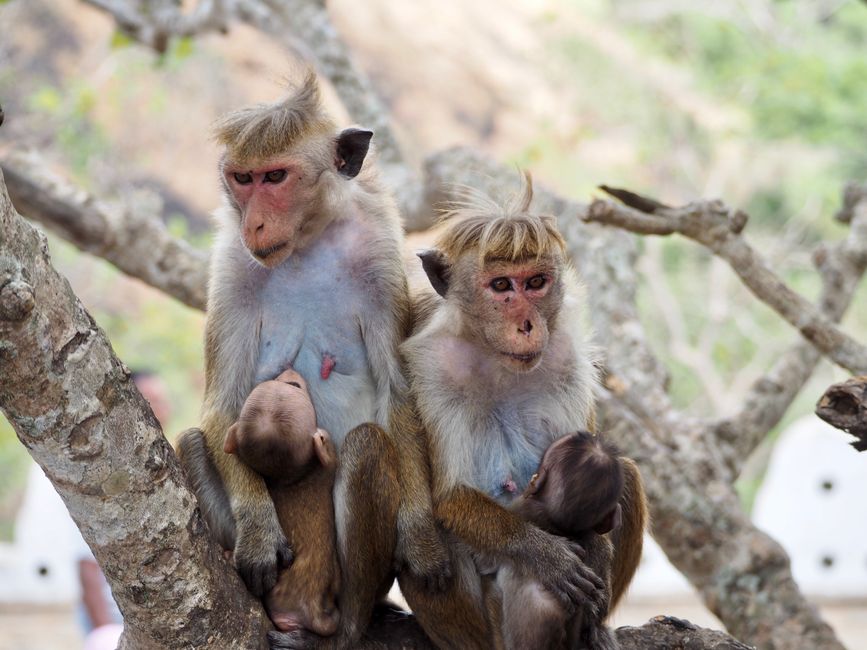
When a mother loses her child, we expect to see certain responses. In humans, grief often brings lethargy, loss of appetite, withdrawal from daily life. But new research on macaque mothers suggests that this pattern of mourning may be distinctly human, not a universal response shared across all primates.
Anthropologists studying macaque mothers found that after the death of an infant, these primates experience a brief period of physical restlessness rather than the slowing down we associate with human bereavement. The mothers did not display the typical signs of grief observed in people, such as reduced energy or changes in eating patterns.
What the research revealed
The study focused on how macaque mothers responded in the period following infant death. Rather than becoming withdrawn or lethargic, the mothers showed increased physical activity and restlessness. This pattern lasted for a short time before the mothers returned to their normal behaviour.
This finding challenges assumptions that grief responses are hardwired across species in the same way. While both human and macaque mothers clearly react to the loss of offspring, the physical and behavioural manifestations appear quite different.
The research matters because it helps us understand what aspects of grief may be shaped by human culture, social structures, and perhaps our particular brain chemistry, versus what might be a more basic mammalian response to loss.
*Photo: Pragyan Bezbaruah · Pexels*
The human dimension of mourning
For humans, grief typically involves a cluster of responses that extend beyond immediate distress. We often see changes in sleep patterns, appetite, energy levels, and motivation. People in bereavement may struggle to engage with normal routines, experience waves of sadness, and need extended time to process loss.
The macaque response suggests these particular patterns may not be universal among primates. Instead, the brief restlessness observed in macaques could represent a different adaptive strategy, one that allows mothers to return more quickly to the demands of survival in their environment.
This does not mean macaque mothers do not experience something profound when losing an infant. But it does suggest that the way grief manifests physically and behaviourally can vary significantly across species, even among close evolutionary relatives.
Why this matters for understanding ourselves
Studies like this one offer a mirror for human experience. By seeing how other primates respond to loss, we gain perspective on what makes human grief distinctive.
The extended period of mourning common in human societies, the social rituals we build around death, the way grief can reshape our daily functioning for months or years, these may all be particularly human adaptations. They might be connected to our complex social bonds, our capacity for abstract thought about mortality, or the way human communities support members through difficult transitions.
For those working in mental health or supporting people through bereavement, this research underscores that human grief is a complex phenomenon with biological, psychological, and cultural dimensions. The fact that our closest primate relatives respond so differently suggests we need approaches to grief support that honour the full depth and duration of human mourning.
The study also reminds us that there is no single right way to grieve, even within our own species. If different primate species show such variation, it makes sense that individual humans would also experience and express loss in diverse ways.
Understanding these differences can help reduce judgment around how people grieve. Some may need extended time away from normal routines. Others may find comfort in returning to activity. Both responses, and everything in between, can be valid.
For podcasters exploring themes of loss, connection, and what makes us human, this research offers rich material. It invites questions about how we create meaning around death, why human mourning takes the forms it does, and how we can better support each other through one of life's most difficult experiences.
The study appears as a reminder that grief, while universal in some form across species, takes shapes that are intimately tied to who we are as humans, how we live, and what we need from each other when facing loss.
Based on reporting from sciencedaily.com.



Comments
Loading comments…