Why Your Brain Recognizes a Chimp's Call Like an Old Friend
New research reveals our minds respond to chimpanzee voices in surprisingly familiar ways, a hint at deep evolutionary bonds.

There is something remarkable happening in the human brain when we hear a chimpanzee call. Not a bonobo. Not a macaque. Specifically a chimp. Researchers have discovered that a specialized region in our auditory cortex responds to the vocalizations of our closest living relatives in ways that suggest millions of years of shared communication history.
The finding adds a new dimension to how we understand human connection, not just with each other but with the broader family tree of primates. It turns out that recognizing voices, something we do effortlessly with friends and family, may have roots far older than our species itself.
A Brain Built to Listen
Scientists have long known that humans possess extraordinary abilities to pick out and identify voices. We can recognize a loved one speaking in a crowded room or detect subtle emotional shifts in a phone call. This skill relies on specific neural architecture, regions of the brain dedicated to processing the human voice in particular ways.
What the new research reveals is that this neural machinery does not stop at our own species. When study participants listened to recordings of chimpanzee vocalizations, a distinct area in the auditory cortex became active in patterns that differed from responses to other primate calls. The brain was not simply processing sound. It was responding to something familiar, something that resonated in ways the researchers had not anticipated.
Interestingly, this special response did not extend to bonobos, who are equally close genetic relatives, or to macaques, who are more distantly related. The specificity points to a complex interplay between evolutionary history and the acoustic properties of the sounds themselves. Chimpanzee calls may carry signatures that our brains still recognize, even after millions of years of separate evolution.

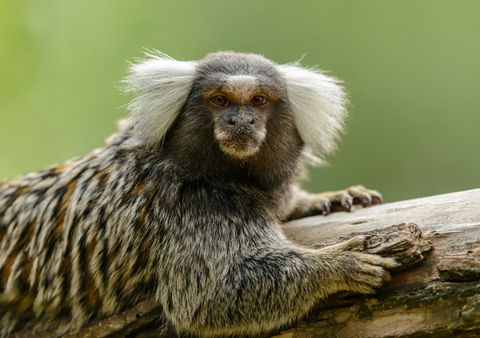
*Photo: Tima Miroshnichenko · Pexels*
What Makes a Voice Feel Known
The implications stretch beyond pure neuroscience. This research touches on something deeply human, the way we are wired to connect through sound and voice. Our ability to hear emotion, intention and identity in vocalizations is not just a cultural achievement. It appears to be built into our biology, shaped by a lineage that extends back to common ancestors we shared with chimpanzees.
This does not mean we understand chimp calls the way we understand language. The recognition is more primal, more about the brain detecting patterns that feel significant even if we cannot translate them into words. It is a reminder that communication existed long before grammar and syntax, in the grunts and hoots and cries that carried meaning across the forest canopy.
For those of us interested in human connection and wellbeing, the finding is a gentle nudge to consider how much of our social world is nonverbal. We respond to tone, cadence and warmth in a voice before we even process the words. We feel heard not just through what is said but through how it is said. These ancient circuits in our brains are still doing the work of connecting us to each other, moment by moment.
Why This Matters Now
In a time when so much communication happens through screens and text, understanding the power of voice feels especially relevant. Podcasters and audio creators know this instinctively. A voice can create intimacy, build trust and convey emotion in ways that written words often cannot. The human brain is exquisitely tuned to this, and now we know that tuning has evolutionary roots deeper than we imagined.
The research also invites a kind of humility. We are not as separate from the rest of the natural world as we sometimes think. The same brain regions that help us recognize a friend's laughter also respond to the calls of our primate cousins. We are part of a continuum, connected by biology and history to creatures we rarely think about in our daily lives.
There is something comforting in that. It suggests that the need to be heard, to recognize and be recognized, is not a modern anxious invention but a thread running through millions of years of evolution. Connection is not optional for us. It is fundamental, woven into the very structure of our minds.
As we continue to learn more about how our brains process voices and build relationships, findings like this remind us that listening is an act of deep biological significance. Whether we are tuning into a podcast, a conversation with a loved one or even the call of a chimpanzee in a research study, our brains are doing ancient work, bridging distances and finding familiar ground in sound.
Based on reporting from sciencedaily.com.


Comments
Loading comments…