
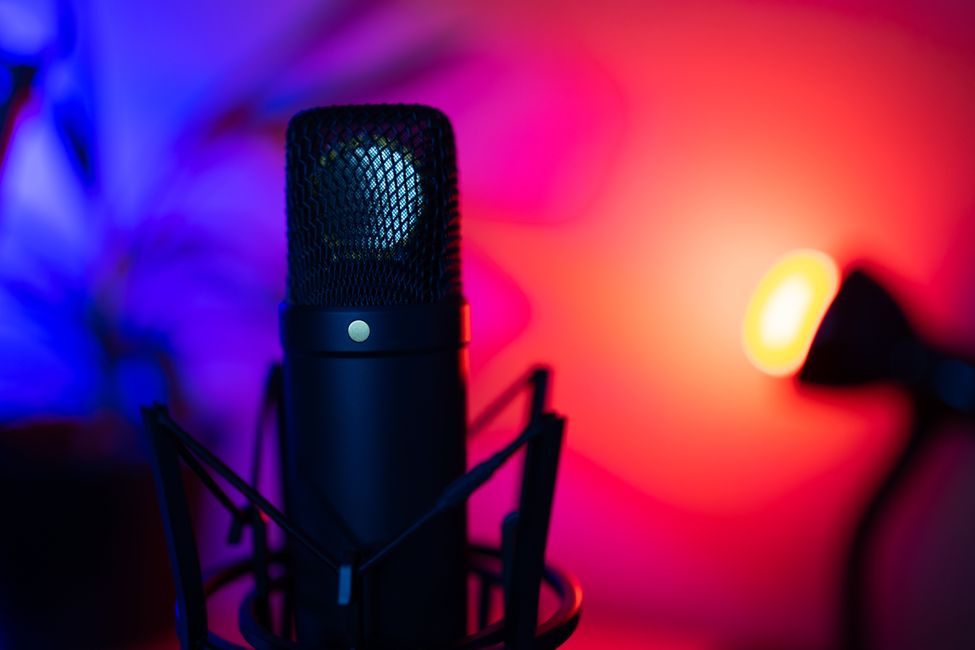
Podcasting has grown into a multi-billion dollar industry, but it still can't answer a surprisingly basic question: what exactly counts as a podcast? That fundamental uncertainty is causing serious problems for creators, advertisers and platforms alike.
The issue came into focus this week when industry observers noted that podcast advertising measurement remains fundamentally broken. The problem isn't just technical glitches or competing methodologies. It runs deeper than that. Without even agreeing on what defines a podcast in the first place, the entire ecosystem struggles to measure audiences accurately or prove value to the brands spending money on ads.
The definition problem
Think about it. Is a YouTube video of someone talking into a microphone a podcast? What about a Spotify exclusive that never generates an RSS feed? Does a three-minute daily news brief count the same way as a two-hour interview show? Different platforms, measurement services and industry bodies all have their own answers.
This lack of consensus creates chaos downstream. When one service counts a listen after thirty seconds and another requires sixty, when some platforms include partial plays and others only track completion, the numbers become almost meaningless. An advertiser trying to compare reach across different shows or networks is essentially comparing apples to oranges to something that might not even be fruit.
The fragmentation affects everyone. Creators can't accurately demonstrate their true audience size. Advertisers struggle to know if they're getting value for money. Platforms measure success differently, making it impossible to benchmark performance across the industry. Even listeners are affected, as the confusion makes it harder for quality shows to prove their worth and secure sustainable funding.

*Photo: Tara Winstead · Pexels*
Why it matters now
This isn't a new problem, but it's becoming more urgent as podcasting matures. In the early days, when podcasting was a scrappy medium driven by passion projects, loose definitions and rough metrics were acceptable. Everyone understood the limitations. But as major advertisers pour serious money into the space and creators build entire businesses around their shows, the stakes have changed.
Traditional media has spent decades developing standardised measurement. Radio has its ratings systems. Television has established metrics. Digital advertising has click-through rates and impressions with agreed-upon definitions. Podcasting, despite its growth, still lacks that foundational infrastructure.
The consequence is inefficiency and mistrust. Advertisers who can measure a Facebook campaign down to the penny find themselves guessing about podcast performance. Creators who deliver genuine value struggle to prove it in ways that corporate marketing departments will accept. Platforms compete on different metrics, making the whole landscape confusing for everyone involved.
Some in the industry argue this flexibility is actually a strength, allowing podcasting to remain open and innovative. Others see it as an existential threat that could limit growth and push advertisers toward more measurable channels.
What needs to change
Solving this requires the industry to have some difficult conversations and make some compromises. Different stakeholders have competing interests. Platforms want definitions that favour their own ecosystem. Independent creators worry that standardisation might advantage big players. Advertisers want certainty but also want to avoid stifling innovation.

*Photo: fauxels · Pexels*
The path forward probably involves some combination of industry-wide standards and room for evolution. Other media have managed this balance. Radio didn't stop innovating when it adopted ratings systems. Digital advertising continues to develop new formats while maintaining measurement baselines.
What seems clear is that the current situation can't continue indefinitely. As podcasting competes for advertising budgets against platforms with sophisticated tracking, the measurement gap becomes a competitive disadvantage. Shows that deserve support may lose out simply because they can't prove their value in the language that advertisers speak.
For creators and listeners, this might all sound like inside baseball. But it matters. Measurement affects which shows get funded, which voices get heard, and whether podcasting can sustain itself as a diverse, creative medium. When great shows can't demonstrate their impact, they struggle to survive. When advertisers can't measure results, they pull back spending. When platforms can't agree on basics, the whole ecosystem suffers.
The good news is that people are talking about it. Acknowledging that podcast measurement is broken is the first step toward fixing it. The industry has solved hard problems before. This one just requires something surprisingly difficult: agreeing on what we're actually measuring in the first place.
For anyone building a show or a podcasting business, understanding these limitations matters. Your audience might be larger or more engaged than the numbers suggest, but proving it remains a challenge the whole industry is still working to solve.
Based on reporting from podnews.net.



Comments
Loading comments…