Why Messy Systems Might Be Stronger Than Perfect Ones
New physics research suggests a little disorder makes networks more stable, which might explain why nature rarely aims for uniformity.
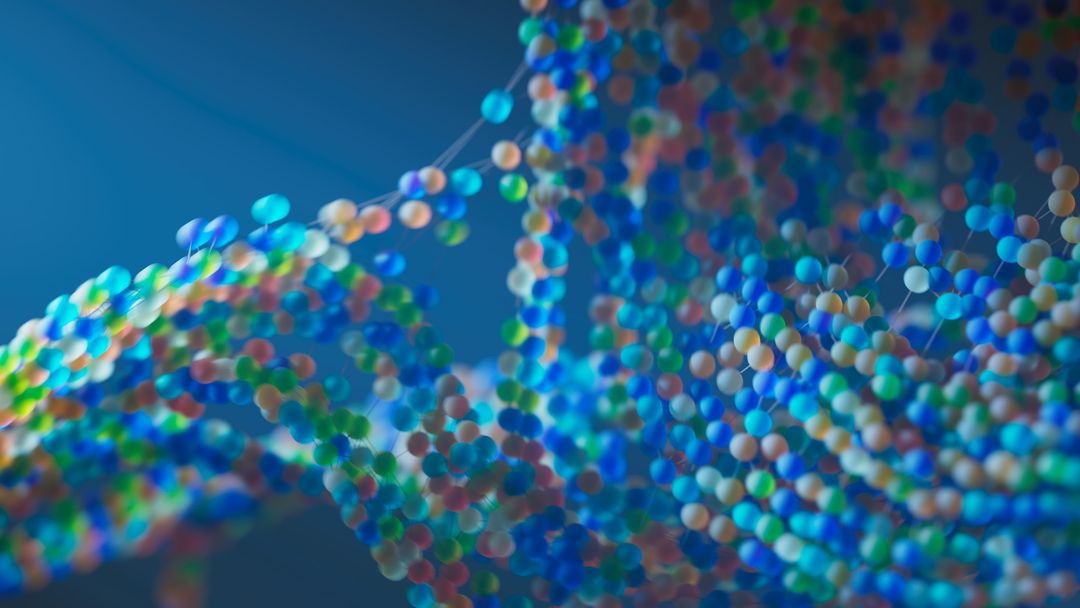
When we think about making something work better, most of us imagine eliminating imperfections. We want every part to match, every connection to be equal, every element to perform identically. But physicists at Northwestern University have discovered something surprising: systems might actually be stronger when their parts aren't perfectly alike.
The research team found that carefully balanced variation, what scientists call "disorder," can make complex networks more stable. This applies to power grids, ecosystems, neurons in our brains, and even materials. In some cases, even random differences improved stability compared with systems where everything was completely uniform.
It's a finding that quietly challenges how we think about resilience, not just in technology but in life itself.
What the Research Revealed
The Northwestern physicists examined how different kinds of networks respond when their components vary from one another. They weren't looking at obvious flaws or breakdowns, but rather at the mathematical patterns that emerge when parts of a system aren't identical.
What they discovered was counterintuitive. Networks with some degree of variation, distributed in particular ways, often proved more stable than their perfectly uniform counterparts. Even when the variation was random rather than carefully designed, the systems sometimes performed better than when everything matched.

*Photo: Emmanuel Codden · Pexels*
This matters because most real-world systems, from the electrical grid that powers your home to the neural pathways that help you think and feel, are made up of components that differ from each other. Until now, engineers and scientists have often treated this variation as something to minimise or work around. The new findings suggest it might actually be a feature rather than a bug.
Why Nature Rarely Does Perfect
One of the most intriguing implications of this research is what it might tell us about the natural world. If you look closely at any ecosystem, any organism, any collection of living things, you'll notice that perfect uniformity is extraordinarily rare. Trees in a forest differ in height and strength. Neurons fire at different thresholds. Animal populations contain individuals with varying traits.
Scientists have long understood that genetic diversity helps species survive changing conditions. But this research points to something broader: the architecture of stability itself might depend on difference.
It's a principle that resonates beyond biology and physics. In human communities, too, we often find that resilience emerges not from everyone being the same, but from a range of perspectives, skills, and approaches. When everyone thinks identically or responds to challenges in exactly the same way, the whole group becomes vulnerable to the same blind spots.

*Photo: Diccy Alba Vega · Pexels*
The physicists' work suggests this isn't just a nice philosophical idea. It might be a fundamental property of how complex systems maintain themselves over time. Networks need some breathing room, some variation in how their parts connect and respond, to absorb shocks and continue functioning when conditions change.
Designing for Resilience
The practical applications could be significant. Engineers designing power grids, communication networks, or infrastructure might be able to build in strategic variation that makes these systems less likely to fail catastrophically. Rather than aiming for perfect uniformity, they could identify the kinds and amounts of difference that actually strengthen the whole.
For materials scientists, the findings open up possibilities for creating substances that are stronger or more flexible by incorporating controlled disorder into their structure. Even in medicine, understanding how beneficial variation works in networks could inform how we think about everything from drug delivery systems to the resilience of biological tissue.
But perhaps the most important takeaway isn't technical at all. It's the reminder that what looks imperfect on the surface might be exactly what makes something strong enough to last.
We live in a culture that often celebrates optimisation, efficiency, and uniformity. We try to eliminate variation in how we work, how we schedule our days, how we approach problems. This research suggests there's wisdom in leaving room for difference, in recognising that a little productive messiness might make us, and the systems we're part of, more resilient.
For those of us creating podcasts or building platforms like this one, it's a useful principle. A network of voices that don't all sound the same, that approach wellness and connection from different angles, might actually be more stable and valuable than one where everyone follows an identical template. The strength is in the variation.
Based on reporting from sciencedaily.com.



Comments
Loading comments…