What Ten Months in Antarctica Taught Us About Human Connection in Isolation
A study of people wintering in Antarctica reveals surprising truths about closeness, conflict, and what happens when we can't get away.
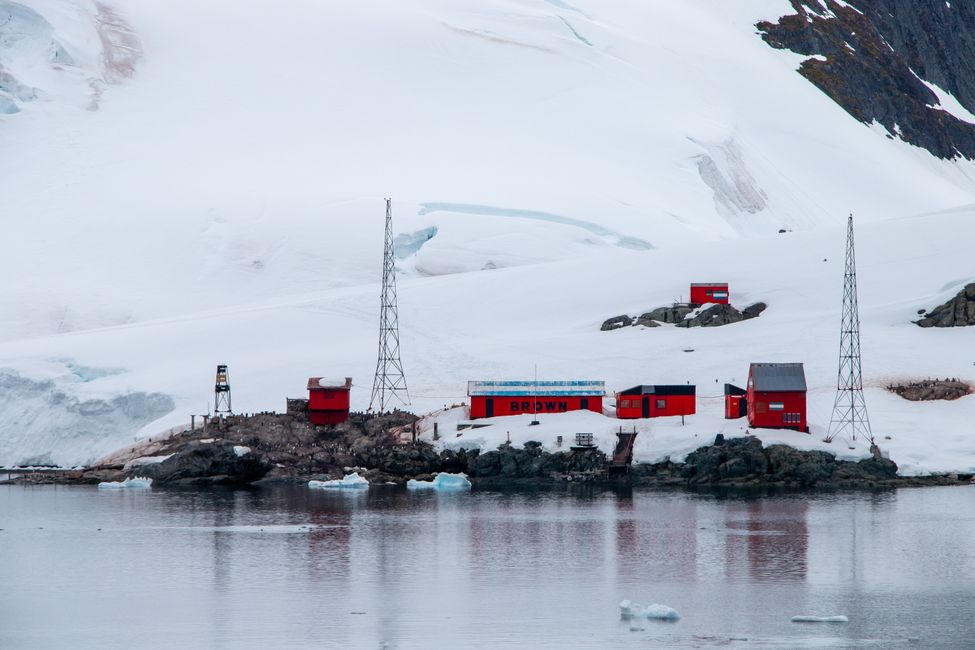
When we imagine astronauts on a future Mars mission, we tend to picture the technical challenges: the journey, the landing, the survival. But a recent experiment in one of Earth's most isolated environments suggests the hardest part might be something we rarely talk about—learning how to be around the same small group of people, day after day, with nowhere else to go.
Scientists tracked twelve people living in Antarctica for ten months, watching how their relationships evolved in conditions that mirror what a crew might face on a long space voyage. What they found challenges some of our assumptions about isolation. The problem isn't just loneliness. It's also what happens when you're never alone.
Too Much Togetherness
The research revealed something counterintuitive. We often think that isolated groups need to bond closely to survive the experience. But the study found that frequent contact between crew members was actually linked to greater tension and mistrust. The more time people spent together in this confined environment, the more friction developed.
This makes a certain kind of sense when you think about it. In normal life, we regulate our relationships through distance. We see friends when we choose to. We take space when we need it. We have different groups for different needs. But in Antarctica, as on a spacecraft, those natural buffers disappear. Every meal, every work shift, every evening happens with the same faces. The things that might be endearing quirks in a friend you see once a week can become sources of irritation when you encounter them every single day.

*Photo: Pavel Danilyuk · Pexels*
The researchers watched as the crew began to fragment. Rather than pulling together as one unified group, people increasingly divided along cultural and language lines. They sought out those who felt most familiar, creating smaller clusters within the larger team. It's a human response to stress—we retreat to what feels safest and most understood.
What This Means for Space Travel
The findings carry real weight for space agencies planning missions to Mars or beyond. A journey to Mars could take six to nine months each way, with crews living in extraordinarily tight quarters. There's no stepping outside for fresh air, no weekend trip to clear your head, no option to simply be somewhere else for a while.
If frequent contact breeds tension even in Antarctica, where crew members can at least walk outside and see a horizon, what happens in a spacecraft where the walls are always just a few metres away? The research suggests that mission planners need to think as carefully about social architecture as they do about engineering. How do you design schedules that give people enough productive contact without tipping into overexposure? How do you create psychological space when physical space is so limited?
The cultural divisions the researchers observed matter too. International crews bring valuable diverse perspectives, but the study suggests they also need intentional support to prevent fracturing under stress. Language barriers, different communication styles, and varying cultural norms around conflict can all become amplified when there's no escape valve.
Lessons for Life on Earth
You don't need to be heading to Mars for this research to feel relevant. Many of us have experienced smaller versions of this dynamic. Perhaps during lockdowns, when households that normally dispersed each day suddenly spent weeks on top of each other. Or in any long-term living situation—student housing, shared flats, even family homes—where the same patterns emerge. Closeness without breaks can strain even strong relationships.
*Photo: Enrico Hänel · Pexels*
The Antarctic study offers a reminder that connection isn't just about proximity. Quality matters more than quantity. We need rhythms that include both togetherness and separateness, both shared activities and individual space. In confined situations, that might mean being more intentional about creating boundaries, respecting different needs for solitude, and recognising that pulling back isn't rejection—it's maintenance.
The findings also highlight something we don't always acknowledge: diversity takes work. Bringing together people from different backgrounds creates richness, but it also requires active effort to bridge differences, especially under pressure. Without that effort, our instinct is often to retreat to what's familiar.
For anyone building teams, running organisations, or even hosting a podcast that brings people together regularly, there's something here worth considering. How do you create enough structure and space that people can collaborate without burning out on each other? How do you honour both the need for connection and the need for breathing room?
The twelve people who spent those ten months in Antarctica have given us a gift—a clearer picture of what humans actually need to thrive in isolation. Not just survival strategies, but wisdom about the delicate balance between too much distance and too little. Whether we're planning for Mars or just trying to live well with the people around us, that understanding matters.
Based on reporting from sciencedaily.com.



Comments
Loading comments…