The quiet link between home routines and workplace creativity
New research finds that reshaping family life to meet changing needs can sharpen the skills we bring to work each day.
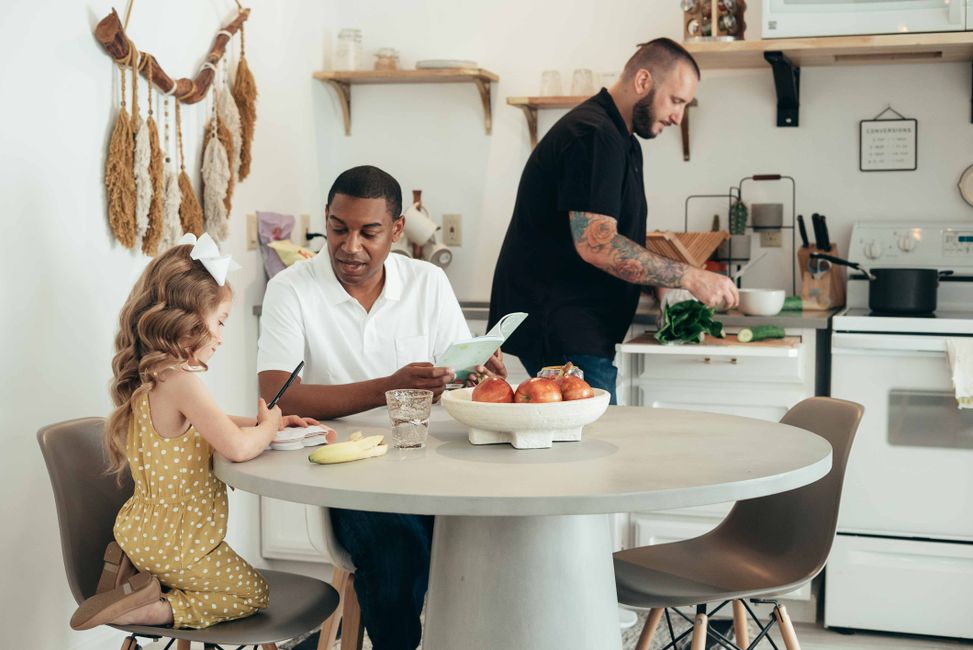
The boundaries between home and work have always been more porous than we admit. Now a new study offers fresh evidence that the way we manage our domestic lives doesn't just affect our stress levels or sleep quality—it can actually shape how we show up professionally.
Researchers have found that people who actively reorganise their family routines are more likely to demonstrate adaptability and innovation in their jobs. The connection isn't about working longer hours or bringing office habits home. It's about something more fundamental: the mental muscles we build when we rethink how our households run.
What the research reveals
The study, reported by ScienceDaily, examined how proactive changes to home life correlate with workplace performance. The kinds of adjustments that mattered weren't dramatic overhauls. They included practical shifts like reworking childcare schedules, redistributing who does which household tasks, or reimagining the flow of a typical weekday evening.
What stood out was the proactive element. This wasn't about reacting to crisis or scrambling when something broke down. It was about people stepping back, noticing what wasn't working, and choosing to try something different. That mindset, it turns out, travels with us when we leave the house.
The researchers suggest that the cognitive work involved in reorganising family life exercises the same capacities we need for problem-solving and creative thinking at work. When we experiment with a new morning routine or figure out a fairer way to split cooking and cleanup, we're practising flexibility. We're learning to question assumptions, test alternatives, and adjust based on what actually works rather than what we've always done.

*Photo: https://kaboompics.com/ · Pexels*
Why home life is a training ground
There's something quietly radical about this finding. For years, the dominant narrative has been about work-life balance, as if the two domains were opposing forces that needed to be kept in equilibrium. This research hints at a different story: that home and work aren't just in tension, they're in conversation.
The skills we develop in one sphere can enrich the other. A parent who renegotiates bedtime routines with a partner is practising collaboration and compromise. Someone who redesigns their weekly meal planning is learning systems thinking. These aren't just survival tactics. They're forms of creative problem-solving that don't switch off when we clock in.
It also offers a reframe for people who feel guilty about the mental energy they spend on domestic logistics. Organising a household, especially one with children or other dependents, is complex cognitive work. It requires planning, coordination, emotional intelligence, and the ability to adapt when plans fall apart. Those aren't soft skills. They're exactly the capacities that workplaces say they value most.
The study doesn't suggest that managing a home is equivalent to a second job, or that we should approach family life with the same productivity mindset we bring to spreadsheets and meetings. But it does quietly validate the intelligence required to keep a household humming, and it hints that this intelligence doesn't evaporate the moment we step into a different role.
What it means for how we think about work
For anyone trying to make sense of their own rhythms, this research offers a permission slip of sorts. It suggests that investing time in getting your home life right isn't a distraction from professional growth. It might actually be part of it.
That doesn't mean every domestic tweak will make you better at your job. But it does mean that the willingness to experiment, to notice what's not working and try something new, is a transferable quality. It's a habit of mind that can show up anywhere.
[IMAGE: shared household task list
It also raises questions about how workplaces support employees. If home life and work performance are genuinely connected, then policies that help people manage their domestic responsibilities aren't just nice perks. They're investments in the adaptability and creativity of the workforce. Flexible hours, parental leave, and support for caregiving aren't separate from performance—they're conditions that make it possible.
For podcasters and creators, many of whom work from home or manage irregular schedules, the findings feel especially relevant. The boundary between personal and professional is often paper-thin. Recognising that the two can nourish each other, rather than always competing for space, might ease some of the tension that comes with wearing multiple hats.
The takeaway isn't that we should optimise every corner of our lives. It's simpler and more human than that. The way we care for our homes and the people in them matters, not just for its own sake, but because it shapes who we become. And that person, with all the resourcefulness and flexibility they've learned in the everyday work of living, is the same one who shows up everywhere else.
Based on reporting from sciencedaily.com.



Comments
Loading comments…