Nanoparticles offer double promise against one of the deadliest brain cancers
New research shows tiny particles can help surgeons see hidden cancer cells and then destroy what's left behind.

Scientists have developed a new tool that could change how we fight glioblastoma, one of the most aggressive and difficult-to-treat brain cancers. The innovation involves nanoparticles so small they're invisible to the naked eye, yet capable of performing two crucial jobs: lighting up cancer cells that surgeons can't see during operations, and then destroying microscopic remnants left behind.
The research, conducted in mice, showed results that researchers rarely see in cancer studies. Every animal treated with these particles survived to the 60-day mark, and none showed signs of the cancer returning. It's important to note that this work has not yet moved to human trials, but the findings represent a meaningful step forward in understanding how we might tackle a disease that has resisted our best efforts for decades.
Why glioblastoma is so hard to beat
Glioblastoma doesn't grow in neat, removable lumps. It sends tendrils into healthy brain tissue, making it nearly impossible for surgeons to remove every last cell without damaging the brain itself. Even after surgery, radiation, and chemotherapy, the cancer almost always comes back. Most patients survive less than two years after diagnosis.
The core problem is visibility. Surgeons work with the best imaging technology available, but microscopic cancer cells hide in plain sight, blending into the surrounding tissue. What looks like a clean margin to the human eye often harbours thousands of cells ready to regrow into tumours.
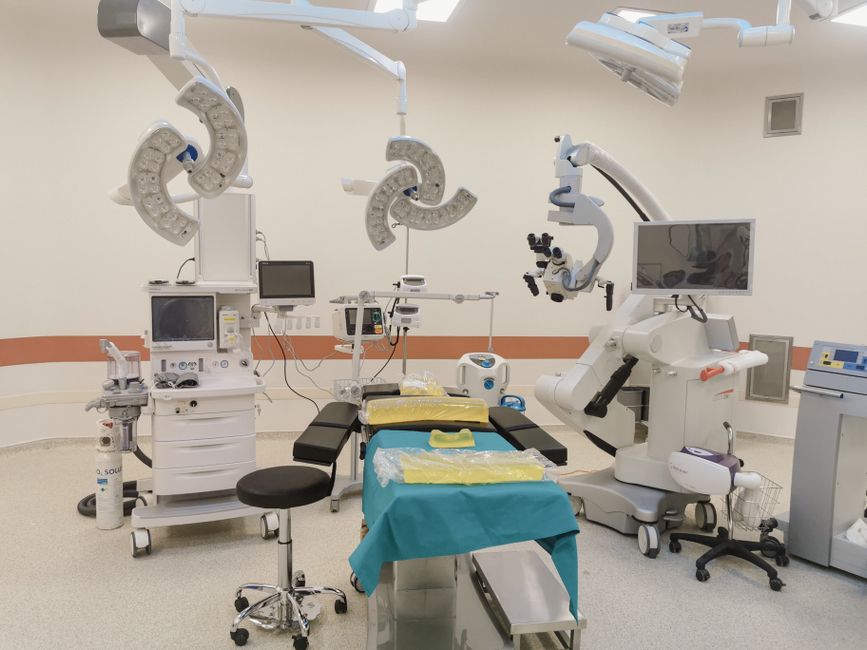
*Photo: Mehmet Turgut Kirkgoz · Pexels*
This is where the new nanoparticles come in. The research team designed them to do something clever: they seek out cancer cells specifically, attach to them, and then glow under certain light conditions. During surgery, this means a neurosurgeon could use special imaging to see clusters of cancer that would otherwise be invisible, guiding more complete removal.
A second act after surgery
But the nanoparticles don't stop working when the operation ends. After helping surgeons remove as much visible cancer as possible, these tiny tools shift into a second mode. They remain in the brain, clinging to any remaining cancer cells, and can be activated to release treatments that destroy those cells from within.
This dual function matters because it addresses both the immediate challenge of surgery and the longer-term threat of recurrence. In the mouse studies, this approach prevented the cancer from coming back entirely, something that standard treatments struggle to achieve.
The particles are described as "smart" because they're selective. They're engineered to recognise markers that appear on glioblastoma cells but not on healthy brain tissue. This targeting reduces the risk of damaging the delicate structures around a tumour, a constant concern in brain surgery where even small mistakes can affect speech, movement, memory, or personality.

*Photo: Pavel Danilyuk · Pexels*
The long road from mice to medicine
The results in mice are striking, but anyone who follows medical research knows that animal studies represent early steps in a long journey. Mice are not people. Their immune systems work differently, their brains are structured differently, and treatments that work brilliantly in the lab sometimes fail or cause unexpected problems in human bodies.
Still, this research offers something that people living with glioblastoma and their families need: a new direction. For decades, treatment options have remained largely the same, and outcomes have improved only marginally. The idea that we might one day combine better surgical precision with targeted destruction of hidden cells feels like progress worth paying attention to.
The scientists behind this work will need to conduct further safety studies, test the particles in larger animals, and eventually seek approval for human trials. That process takes years, involves setbacks, and requires careful attention to side effects and long-term outcomes. But each step brings us closer to tools that might turn a devastating diagnosis into something more survivable.
Why this matters
For anyone touched by brain cancer, whether as a patient, family member, or friend, news like this carries weight. It reminds us that researchers are still searching, still testing new ideas, still refusing to accept current limitations as permanent. The work also highlights how technology at the smallest scales can address problems that seem insurmountable at the human scale.
Even for those of us not directly affected by glioblastoma, stories like this one connect to something larger: our collective effort to understand and heal the most complex organ we have. Every advance in brain cancer treatment teaches us more about how the brain works, how cancer evades our defences, and how we might design smarter interventions for other conditions too.
The path from laboratory discovery to bedside treatment is never straight or quick, but it's paved with moments like this one, when researchers show us what might be possible.
Based on reporting from sciencedaily.com.


Comments
Loading comments…