Morning routines and simple habits may shape how we handle stress
New research suggests that everyday choices like eating breakfast and sleeping well might matter more for our resilience than we think.

The way we start our day might be doing more than just fuelling our bodies. It could be quietly building our capacity to navigate whatever stress comes our way.
Researchers at Binghamton University looked at the daily habits of around 400 college students and found something striking: those who ate breakfast regularly, exercised, slept well, and took fish oil showed greater psychological flexibility. That is the ability to adapt when life throws curveballs, to adjust your thinking when plans fall apart, to stay steady when things feel uncertain.
On the other side, students with poor sleep and unhealthy eating patterns showed lower flexibility and less resilience overall.
What psychological flexibility actually means
Psychological flexibility is not about being carefree or never feeling rattled. It is about how we respond when we do feel that way. It is the difference between getting stuck in a spiral of worry and being able to notice what is happening, take a breath, and choose a helpful next step.
When we are psychologically flexible, we can hold difficult feelings without being controlled by them. We can shift perspective when something is not working. We can stay present even when the present is uncomfortable.
The Binghamton study suggests that this quality, which sounds almost intangible, might be connected to surprisingly concrete things: whether we ate this morning, how we slept last night, whether we moved our bodies this week.
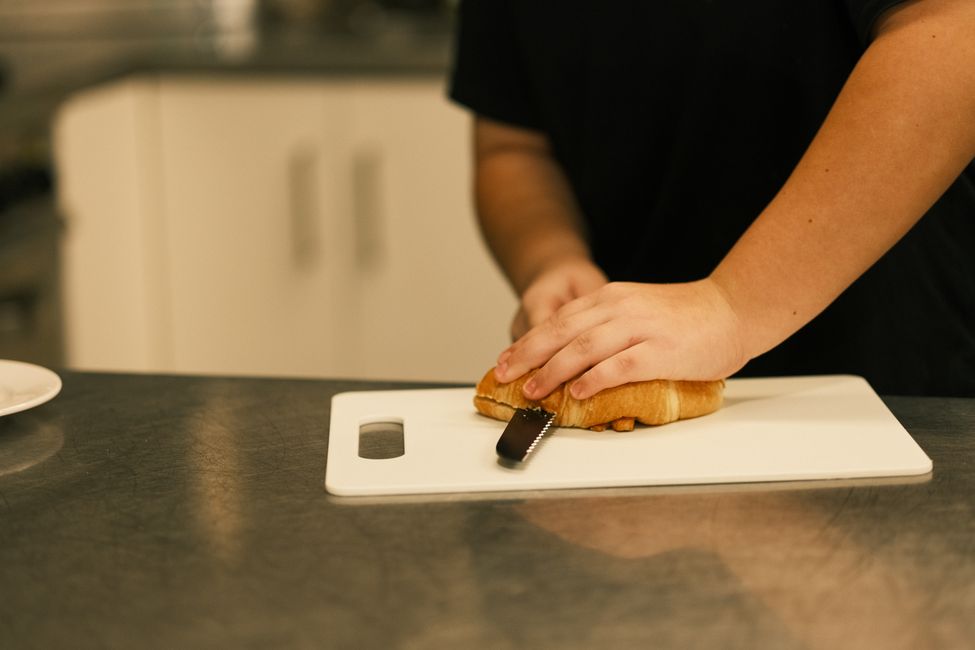
*Photo: ~* gEm *~ · Pexels*
The breakfast connection
Breakfast has been studied for decades, mostly in relation to focus and energy. But this research points to something subtler. Eating in the morning may be one small signal to our nervous system that we are resourced, that we are looking after ourselves, that there is enough.
That sense of being looked after, even by ourselves, might matter when stress arrives. It is harder to stay grounded when you are running on empty, when your blood sugar is erratic, when your body is already in a low-level state of alarm before the day has even begun.
The same logic seems to apply to sleep. Poor sleep does not just make us tired. It changes how we process emotions, how we interpret ambiguous situations, how quickly we tip into fight or flight. When we are well rested, we have more room to respond rather than react.
Exercise, too, has long been linked to better mental health outcomes. But framing it through the lens of flexibility adds nuance. Movement might not just lift our mood in the moment. It might be training us, on some level, to tolerate discomfort, to keep going when things are hard, to trust that our state can shift.
The fish oil factor
The inclusion of fish oil in the study is interesting. Omega-3 fatty acids, found in fish oil, have been researched for their potential role in brain health and mood regulation. While the mechanisms are still being understood, this study adds another thread: that these nutrients might support the very quality that helps us bend without breaking.
It is worth noting that the researchers did not claim fish oil alone makes someone resilient. It was part of a broader pattern of self-care habits that seemed to work together.

*Photo: Liliana Drew · Pexels*
Why this matters beyond college campuses
The study focused on university students, a group often navigating high stress, irregular schedules, and significant life transitions. But the implications stretch further.
Many of us, whether we are podcasters working late into the night, carers managing others' needs before our own, or anyone juggling too much, tend to let the basics slide when we are busy. We skip breakfast to save time. We cut sleep to meet a deadline. We sit for hours without moving.
This research suggests that those trade-offs might have a hidden cost. Not just to our energy, but to our ability to cope when things get hard.
The good news is that none of the habits identified require expensive interventions or dramatic life overhauls. They are accessible. They are ordinary. And that ordinariness might be the point.
Resilience is not always built in grand gestures. Sometimes it is built in the morning, one steady choice at a time.
For podcasters and creators who often work in isolation, managing your own schedule and your own wellbeing without external structure, this feels especially relevant. The work asks a lot. But if small, repeated acts of care can genuinely shore up our capacity to meet that demand, then they are not indulgences. They are infrastructure.
Based on reporting from sciencedaily.com.



Comments
Loading comments…