How the rhythm of your breath might shift the risks you're willing to take
New research finds that slowing your exhale changes how your brain weighs risk and reward, opening a window into the body-mind loop.

The next time you're facing a decision that feels risky, whether it's raising your hand in a meeting or choosing the less-travelled path, you might want to pause and take a longer breath out. Researchers have discovered that something as fundamental as the way we breathe can influence how willing we are to take chances, and the mechanism runs deeper than simply calming our nerves.
A simple shift in breathing pattern
The study examined what happens when people slow their breathing and extend their exhale beyond the length of their inhale. This deliberate pattern, sometimes called slow paced breathing, did more than relax participants. It actually made them more open to taking risks. The effect wasn't about feeling more confident or courageous in a psychological sense alone. Instead, the researchers found measurable changes in heart activity and in how the brain itself responded to the possibility of reward.
This points to a direct pathway between the body and decision-making centres in the brain. When we breathe slowly with a longer exhale, the shift ripples through the nervous system, altering the way our brain evaluates what we stand to gain or lose. The brain became more sensitive to rewards, meaning potential upsides carried more weight in the decision-making process.

*Photo: cottonbro studio · Pexels*
The body-brain loop in action
We often think of choices as purely mental exercises, products of logic or gut feeling. But this research reinforces something many contemplative traditions have known for centuries: the body and mind are in constant conversation. The rhythm of your heartbeat, the depth of your breath, these aren't just background processes. They feed information back to the brain, influencing how we perceive the world and how we act within it.
The heart and brain are connected through a network called the autonomic nervous system, which regulates unconscious functions like breathing and heart rate. When we lengthen the exhale, we activate the parasympathetic branch of this system, often called the rest-and-digest mode. This is the counterbalance to the fight-or-flight response. The heart rate slows, the body settles, and apparently, the brain recalibrates how it weighs uncertain outcomes.
What makes this finding compelling is its simplicity. The intervention wasn't a drug or a complex behavioural therapy. It was breath, something every person does roughly 20,000 times a day, mostly without thinking.
What it means for everyday life
The implications stretch across different areas of life. For someone who struggles with decision paralysis or excessive caution, knowing that a breathing technique could gently shift the internal scales might offer a practical tool. It doesn't force boldness or override good judgment. It simply adjusts the internal climate in which decisions are made.
Of course, not all risk-taking is beneficial. Context matters enormously. But many of us err on the side of over-caution, held back not by rational assessment but by a nervous system stuck in a defensive posture. If slow breathing with a prolonged exhale can ease that stance, it could help people take the small, necessary risks that lead to growth, whether that's speaking up, trying something new, or allowing themselves to be vulnerable.
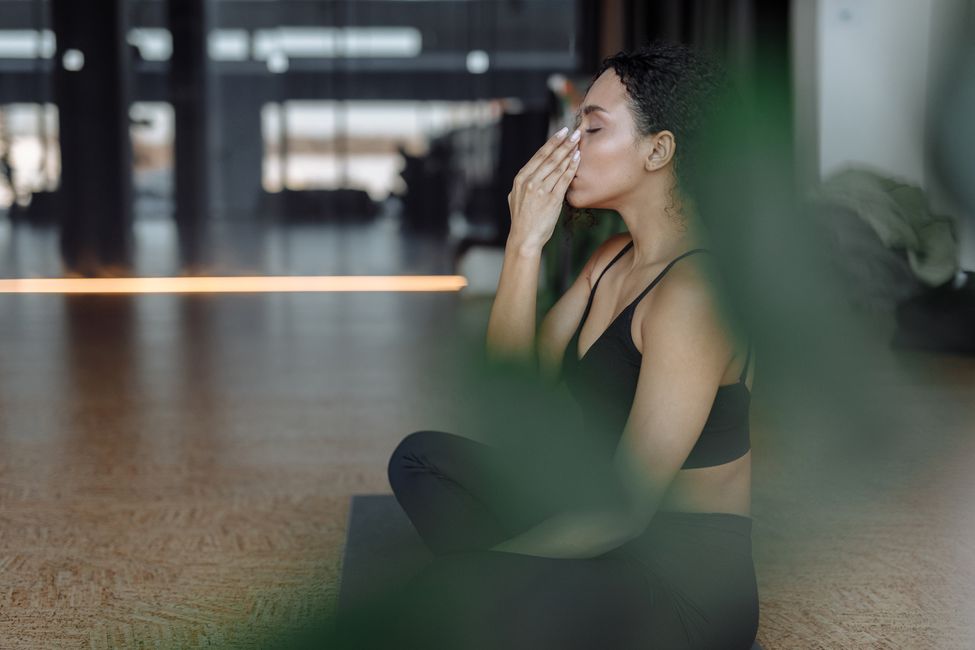
*Photo: Thirdman · Pexels*
For podcasters and creators, this research is a quiet reminder that preparation isn't only about content or confidence. It's also about state. Before recording, before going live, the way you breathe might shape not just your nerves but your willingness to take creative risks, to share something raw, to let a conversation go somewhere unplanned.
The study doesn't suggest breath control is a magic switch. Choices are still complex, shaped by values, history, and circumstance. But it does add another layer to our understanding of how embodied we really are. The brain doesn't float in isolation. It listens to the body, and the body, in turn, can be guided.
This is empowering in a humble way. It means we have more influence over our inner weather than we might assume. A longer exhale won't solve everything, but it might help us meet the moment with a little more openness, a little less grip. And sometimes, that shift is exactly what's needed to move forward.
Based on reporting from sciencedaily.com.



Comments
Loading comments…