Finnish study finds screen time linked to sharper thinking in teens
Eight years of data challenges the blanket fear around screens, pointing instead to the quality of what children do online.

For years, parents and educators have been told to limit screen time, full stop. The message has been simple: too much time in front of screens harms developing minds. But a new long-term study from Finland suggests the reality may be more nuanced than we thought.
Researchers followed children for eight years and found something unexpected. Those who spent more time on screens during childhood tended to show better cognitive processing when they reached their teenage years. The findings don't suggest we throw caution to the wind, but they do challenge the blanket fear many of us carry about screens and young minds.
What the research actually found
The Finnish study tracked children over nearly a decade, measuring both their screen habits and their cognitive development as they grew. By the time these children reached adolescence, those with higher screen time in earlier years were performing better on measures of cognitive processing.
The researchers were careful to point out that this doesn't mean all screen time is beneficial. What seems to matter is the balance children strike between different activities, and crucially, what they're actually doing when they're on screens.
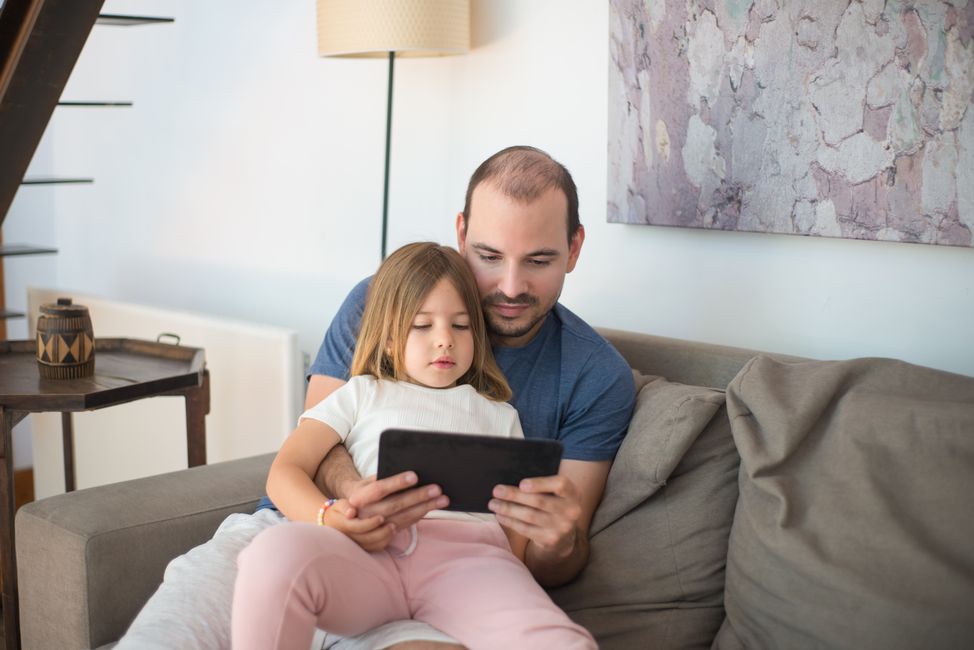
*Photo: Kampus Production · Pexels*
The study suggests that screen activities which encourage learning, creativity, and active thinking may support cognitive development in ways we haven't fully appreciated. This stands in contrast to purely passive consumption, though the research didn't break down exactly which types of screen use were most beneficial.
Importantly, the researchers emphasised that physical activity still matters enormously. The key appears to be balance rather than elimination.
Why this feels different from what we've heard
Most guidance around children and screens has leaned heavily toward restriction. We've been told about attention problems, sleep disruption, and developmental delays. Some of those concerns remain valid, particularly around very young children and excessive use that crowds out other essential activities.
But this Finnish research adds an important layer to the conversation. It suggests that in moderate amounts, and when paired with physical movement and real-world interaction, screen time might not be the universal villain it's often painted as.
For many parents, this will feel like a relief. The reality of modern life means screens are woven into education, creativity, and connection. Trying to eliminate them entirely often creates stress and conflict in families. Knowing that thoughtful screen use might actually support cognitive growth takes some of the guilt and anxiety out of the equation.
The challenge, of course, is defining what thoughtful use looks like. The study points toward activities that engage a child's mind actively rather than letting them zone out. That might mean educational games, creative apps, video calls with family, or even certain kinds of age-appropriate gaming that require strategy and problem-solving.

*Photo: Ron Lach · Pexels*
What this means for families and wellbeing
This research doesn't give us permission to hand children unlimited screen access. What it does is remind us that the conversation is more complex than we've sometimes made it.
Screens are tools. Like most tools, their impact depends on how they're used. A child who spends time building things in a creative app, learning a language, or connecting with distant relatives is having a fundamentally different experience than one passively scrolling for hours.
The Finnish researchers highlighted physical activity as a key part of the balance. Children still need to move, play outside, use their bodies, and engage with the three-dimensional world. But within a life that includes those things, screens can apparently coexist without harming cognitive development. In some cases, they might even support it.
For parents feeling overwhelmed by conflicting advice, this study offers a more grounded path forward. Instead of tracking minutes obsessively or banning devices entirely, the focus can shift to the quality of screen time and ensuring it doesn't crowd out movement, sleep, and face-to-face connection.
This also matters for how we talk to children about technology. Rather than framing screens as inherently bad, we can help young people develop their own sense of balance and discernment about how they spend their time online.
The research comes from a culture that values both education and outdoor life, which may have influenced how families balanced these activities. But the core insight travels: children's brains are adaptable, and they can thrive with technology when it's part of a varied, active life.
For podcasters and educators in the mental wellness space, this study is a reminder to resist oversimplification. Our audiences are navigating real lives with real constraints. They need nuance, not fear. The evidence increasingly suggests that moderate, engaged screen use, balanced with physical activity and human connection, can be part of a healthy childhood.
Based on reporting from sciencedaily.com.



Comments
Loading comments…